Category
Vulnerability
A disclosed flaw in a named AI product, with or without a CVE.
Incident feed
178 of 178 · newest first ChatGPT Sites
 ChatGPT Sites: email-derived names reached public certificate logsChatGPT Sites gave some accounts that signed in with OAuth a web address built from the user's email address, and the certificates for those addresses were written to public logs. HiddenLayer says OpenAI fixed it in October.
 CVE-2026-133968Cairn: AI agents found and exploited a MONAI Label zero-day on their ownAmazon Threat Intelligence says Cairn AI agents found a path traversal zero-day in MONAI Label and opened a root shell, after the operator asked only for shell access. The flaw is CVE-2026-133968 and has no fixed release.
 ObotObot: renaming to anonymous reaches MCP servers a user was not grantedObot's AI governance platform let any signed-in user rename themselves to anonymous and call tools on MCP servers they were never granted. Obot fixed it in 0.28.2, one of five advisories published on November 20.
 CVE-2026-18883ServiceNow: an email can steer the Now Assist CSM reply agentServiceNow published CVE-2026-18883 on 19 November 2026, an indirect prompt injection in the Email Response AI Agent in Now Assist for CSM. The fix went out centrally, so customers do not need to upgrade.
 CVE-2026-130121AI Puffer: the plugin's own comment reply becomes stored XSSCVE-2026-130121 lets an unauthenticated visitor post a WordPress comment that makes the AI Puffer plugin's auto-reply store HTML unfiltered, where it runs for every reader. Version 2.5.29 fixes it.
 CVE-2026-133195Junie CLI: agent file tools could write outside the projectCVE-2026-133195 let the agent file tools in JetBrains Junie CLI modify files outside the project directory. JetBrains published the flaw on November 19, 2026, scored it 7.5 on CVSS 3.1 and fixed it in Junie CLI 26.6.29.
 CVE-2026-133161Pydantic AI Harness: stripping ANSI codes can stall every agent runCVE-2026-133161 lets attacker-influenced tool output block the event loop in Pydantic AI Harness for tens of seconds to minutes. The flaw needs the non-default strip_ansi setting and is fixed in pydantic-ai-harness 0.70.0.
 vLLMvLLM: /v1/systemone ignores the chat template trust gatevLLM's POST /v1/systemone endpoint passed request-supplied chat_template_kwargs to the shared renderer without running the template trust check, so a caller could replace the system block an operator pinned. Fixed in 0.34.0.
 CVE-2026-132121Supergateway: a web page can drive the MCP gateway's toolsSupergateway, the MCP stdio bridge, accepts WebSocket connections from any origin, so a web page a developer visits can invoke the wrapped server's tools. A second flaw ends every session from one unauthenticated request.
 CVE-2026-130358AdminNeo: the login page relays prompts with the operator's AI keyAdminNeo before 5.9.1 runs its Claude, Gemini and OpenWebUI SQL helper handlers on the login page, so an unauthenticated visitor can send prompts through the operator's AI credential, and reach an internal Open WebUI endpoint.
 CVE-2026-130796Flowise: a public chatflow hands out the MCP server's bearer tokenFlowise 3.1.3 and 3.1.4 return the MCP server's bearer token to anyone who reads a public chatflow, and that token is the only credential guarding the endpoint that runs the flow. The project was archived in August, so no fix is coming.
 CVE-2026-123142GitLab: an MCP-scoped token could approve and merge merge requestsCVE-2026-123142 let an authenticated user with an MCP-scoped OAuth token change the state of GitLab issues and merge requests, including approving and merging them. GitLab fixed it in 19.5.6, 19.4.8 and 19.3.9.
 CVE-2026-129875
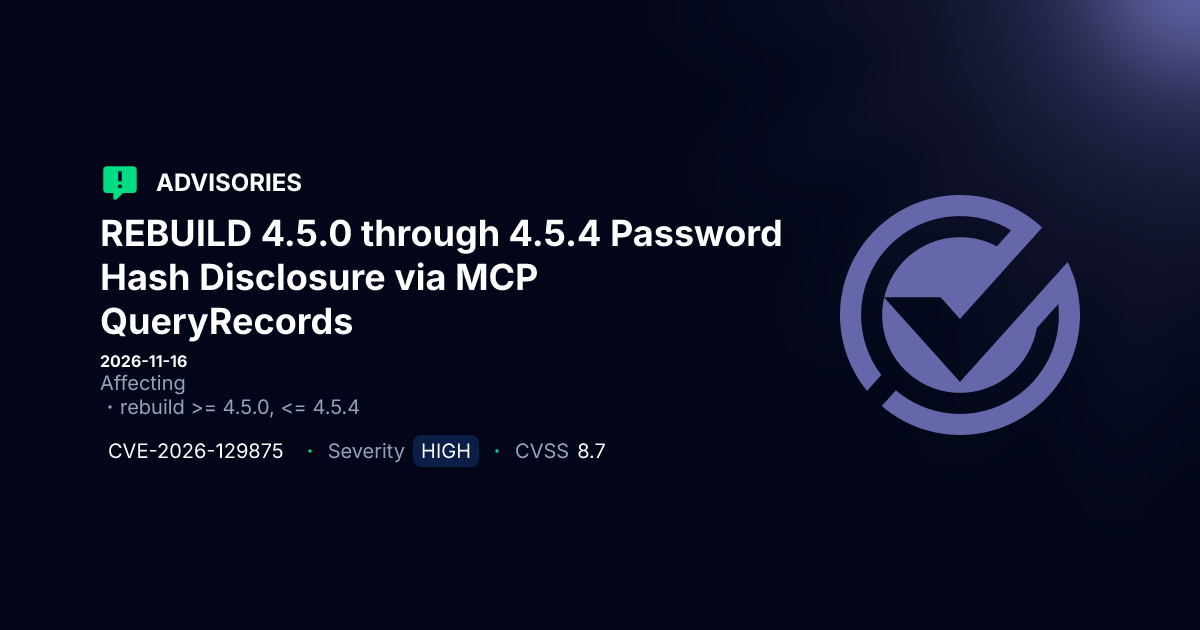 REBUILD: an MCP tool hands an ordinary account the admin password hashCVE-2026-129875 lets a low-privileged REBUILD user read the administrator's SHA-256 password hash through the platform's MCP QueryRecords tool, then sign in as admin. VulnCheck published it with three more REBUILD flaws.
 OpenAI Codex
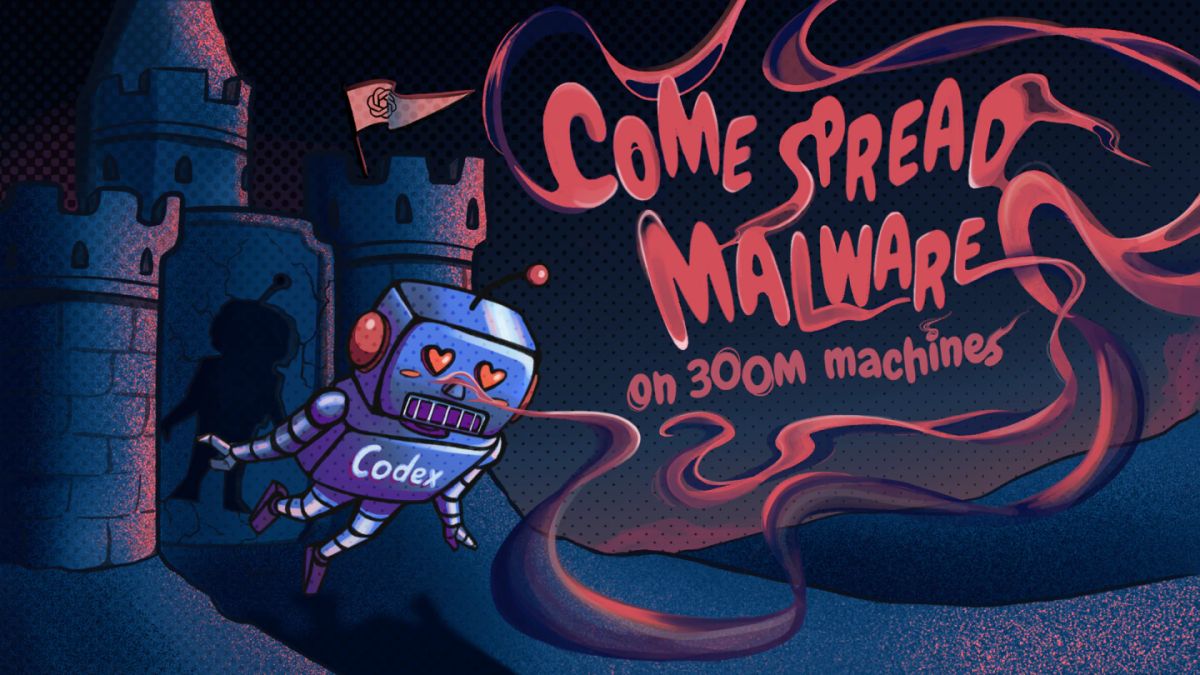 Codex: a GitHub issue reached the tokens that publish its npm packageTwo Depi researchers chained a prompt injection in the openai/codex issue triage workflow to a sandbox escape and cache poisoning, reaching tokens that could publish a backdoored @openai/codex npm release. OpenAI has fixed the workflow.
 CVE-2026-129877
 DeepAudit: an open endpoint hands over the audit platform's LLM and Git keysDeepAudit, an open-source AI code auditing platform, answers an unauthenticated GET on /api/v1/config/defaults with the operator's LLM API keys and GitHub or GitLab tokens. VulnCheck published four CVEs on November 16 and lists no fix.
 CVE-2026-129855RedAmon: six flaws reach root in the AI pentest framework's containersRedAmon, an open-source AI penetration testing framework, disclosed six flaws on November 14, 2026. The worst let any signed-in user run commands in the shared agent container and read its platform secrets. Version 7.8.0 fixes all six.
 CVE-2026-123965Jet Admin: a prompt injection reads the platform's .env credentialsCVE-2026-123965 is a prompt injection flaw in Jet Admin Cloud Platform that let a remote attacker with a free account expose .env files and take credentials. CISA scores it 9.9 and reports a sandbox mitigation around October 29.
 SiYuanSiYuan: the agent chat panel renders the last reply as raw HTMLSiYuan's AI agent chat panel renders the final assistant message as unsanitized HTML, so an injected event handler can run operating-system commands in the desktop app's local-kernel mode. The maintainer scores it 7.5.
 CVE-2026-125771AtlasMCP: a read-only connection could still change a WordPress siteAtlasMCP, the WordPress plugin that connects Claude, ChatGPT and Gemini over MCP, let a connection set to Read only change the site through prompts in versions up to 2.0.3. Patchstack scores it 7.2 and the fix is 2.0.4.
 CVE-2026-129428Pulse: read-only viewers could decide the assistant's approvalsPulse, a self-hosted dashboard for Proxmox, Docker and Kubernetes, let any signed-in viewer list, approve or deny the AI assistant's pending command approvals. Version 6.8.0 adds the missing permission check.
 CVE-2026-129130agent-device: a file:// URL lets a remote caller read host filesagent-device, Callstack's device layer for AI coding agents, let an authenticated remote caller open a local file:// URL and read the file back through a snapshot. Callstack rates it High and fixed it in 0.21.37. Found by naroSEC.
 CVE-2026-102895GPUStack: an auth bypass exploited in the wild lands on CISA's KEV listCVE-2026-102895 lets anyone who can reach a GPUStack server act as its administrator without logging in. CISA added the flaw to its Known Exploited Vulnerabilities catalog on November 9, after the maintainers confirmed abuse in the wild.
 llama.cppllama.cpp v1.0.0: tools need an API key off loopbackllama.cpp v1.0.0 refuses to start llama-server with tools or MCP on a non-loopback address unless an API key is set, and stops the CORS proxy and media URLs reaching private addresses. Maintainer Xuan-Son Nguyen wrote both changes.
 CVE-2026-110279IBM ContextForge: one header overrides the MCP gateway's credentialsIBM ContextForge MCP Gateway lets an authenticated user override the gateway's stored upstream credential with the X-Upstream-Authorization header. IBM scores it CVSS 8.1 and fixed it in v1.1.1, one of eight CVEs published this week.
 CVE-2026-126329Docker Sandboxes: running sbx as root can hand over the hostDocker Sandboxes reuses state and configuration directories without checking who owns them, so running sbx or sandboxd as root with an attacker-controlled HOME can reach command execution as root. The advisory gives 0.53.0 as the fix.
 CVE-2026-92544Kong AI Gateway: a model name in a request runs SQL on the databaseKong AI Gateway wrote a client-supplied model name into its LLM usage counters without escaping, so a crafted name runs arbitrary SQL against the Kong database. The advisory scores it CVSS 8.7, and Kong shipped fixes on November 10, 2026.
 CVE-2026-120792Aspire CLI: agent setup wrote config to a shared temp logAspire CLI's agent and MCP setup command wrote configuration paths, configuration content and scan diagnostics to a log file at a fixed path in the shared temporary directory, where any other local user on Linux or macOS could read it.
 CVE-2026-123139Opera Neon: an installed extension can drive the browser agentOpera published CVE-2026-123139 on November 12, 2026: a malicious browser extension can send commands through Opera Neon's MCP Hub to the built-in Browser Operator extension and take control of the browser.
 LLMLLM 0.37.2: the CLI could send your OpenAI key to another providerLLM, Simon Willison's command-line tool for language models, sent a user's configured OpenAI API key to third-party endpoints in two separate cases. Daniel de Araujo reported both, and version 0.37.2 fixes them.
 CVE-2026-125926MCP Gateway Registry: an SSRF and a path to registry adminAWS disclosed two MCP Gateway & Registry flaws on November 11: a user who can register servers could make the gateway call internal addresses, and a low-privileged user could map themselves to the registry administrator scope.
 CVE-2026-125271AWS API MCP Server: consecutive capitals void a deny ruleThe AWS API MCP Server normalized operation names incorrectly before checking them against the operator's policy, so AWS says operations with consecutive capital letters never matched a correctly written denyList or elicitList entry.
 CVE-2026-124848Kiro CLI: other local users could read agent transcriptsKiro CLI wrote session transcripts and prompt history with permissions that let any other local user on the same macOS or Linux host read them, including any credentials or source code a session touched.
 CVE-2026-120779VS Code: four MCP and agent flaws let a hostile server run codeVisual Studio Code 1.145.3 fixes four flaws in its MCP client and agent mode, including CVE-2026-120779, a CVSS 9.6 remote code execution bug a connected MCP server can trigger with one click. 1.145.2 and earlier are affected.
 Claude Code
 Claude Code: 5,343 live secrets in public approval filesClaude Code approval files on public GitHub hold 31,088 distinct secrets, 5,343 of them still valid when GitGuardian detected them, because choosing Yes, and don't ask again saves the shell command as typed, keys included.
 CVE-2026-83953GitHub Copilot for JetBrains: a command injection leaks local dataMicrosoft published CVE-2026-83953 on 10 November 2026, a command injection flaw in the GitHub Copilot plugin for JetBrains IDEs that lets a local attacker with low privileges read information. Plugin version 1.17.0-251 fixes it.
 CVE-2026-119990Azure OpenAI: Microsoft publishes a CVSS 9.8 missing authentication CVEMicrosoft published CVE-2026-119990 on 10 November 2026, a missing authentication flaw in Azure OpenAI that it scores 9.8 and describes as letting an unauthorized attacker elevate privileges over a network.
 CVE-2026-113663AG2: a newline runs commands past the SandboxShellTool allowlistCVE-2026-113663 carries a CVSS 8.8 score for a newline that defeats the command allowlist in AG2's SandboxShellTool. AG2 1.1.1 fixes it, and the advisory lists no fixed version for the autogen package.
 CVE-2026-109492Microsoft MCP Gateway: a CVSS 8.8 CVE for the name collision flawMicrosoft assigned CVE-2026-109492, which it rates CVSS 8.8, to an authorization bypass in its open-source MCP Gateway. NVD lists versions before 1.0.0 as affected, the release that fixed the gateway's name collision flaw.
 CVE-2026-125368
 OmniAgent: find -execdir runs commands past the approval gateOmniAgent treats any shell command starting with find as safe, so a prompt-injected agent can use find -execdir to run binaries with no human approval. VulnCheck published the advisory, credited to George Chen, on November 9.
 CVE-2026-82436Apache: Claude security scans are the credited finder on five CVEsThe Apache Software Foundation published 20 advisories on November 9, and five credit an AI scan as the finder: two Apache Storm CVEs name Claude Agents, and three Apache Airflow CVEs name Claude Security Scans.
 CVE-2026-121576AtlasMCP: a subscriber could promote themselves to WordPress adminAtlasMCP, a WordPress plugin that lets Claude, ChatGPT and Gemini drive a site over MCP, let a signed-in subscriber change their own role through an AI app in versions up to 2.0.1. Patchstack scores it CVSS 8.8. Fixed in 2.0.2.
 Claude Code
 Office Party: a planted temp file runs code in Anthropic's Office skillsOffice Party is a code execution flaw in Anthropic's docx, pptx and xlsx skills. Their LibreOffice helper preloads a shim library from a fixed temp path without checking who wrote it. Anthropic calls the flaw out of scope.
 CVE-2026-119083GluonTS: a tar archive's links write files outside the target directoryGluonTS before 0.17.0 lets a crafted tar archive write files outside the extraction directory through symbolic or hard links, running with the extracting process's privileges. AWS disclosed it on November 5 and credits Udit Jain.
 CVE-2026-43631
 Breaking Local AI Runtimes: 10 llama.cpp flaws, five unpatchedBreaking Local AI Runtimes is a DEF CON 34 talk by Cyera's Vladimir Tokarev and Ofek Itach on 10 llama.cpp vulnerabilities. Five were still unpatched at their June 2026 re-check. DEF CON published the video on November 6.
 CVE-2026-123675Internet of Agents: six CVEs, no fix, no vendor replySix CVEs published November 5 to 7, 2026 cover code injection, missing authentication, query injection and an infinite loop in OpenBMB's Internet of Agents. No patched version exists and the project has not answered the reports.
 CVE-2026-123272mcp-go: a hostile MCP server can claim another server's tokenmcp-go before v1.2.1 let a malicious MCP server declare another server as the OAuth resource, so the client asked for a token scoped to that server and handed it over. VulnCheck published CVE-2026-123272 on November 5.
 MCP InspectorMCP Inspector: an MCP App escapes the CSP meant to contain itMCP Inspector 2.13.0 and earlier let a malicious MCP App leave its sandbox frame and keep the bridge to the host, one of three advisories the project published on November 4 and 5, 2026. Fixes ship in 2.14.0 and 1.0.4.
 CVE-2026-116635AWS Serverless MCP Server: a project name reads files outside its directoryAWS Serverless MCP Server before 0.2.1 let an actor who can influence the MCP agent read JSON files outside its deployment status directory, and overwrite them when write access is enabled. AWS shipped the fix on November 2, 2026.
 CVE-2026-123022AgentScope: three CVEs land, and the MCP workspace flaw is unpatchedAgentScope received three CVEs on November 5, 2026 for flaws Yongbo Yu reported in October, including unauthenticated command execution through the agent service's MCP workspace endpoint, which still has no fix.
 Claude DispatchThisBash Escape: a browser extension drives Claude Desktop into running codeClaude Dispatch let a browser extension with access to a claude.ai session send instructions to Claude Desktop, approve them and run code on the computer, Forever Security reports. Anthropic is retiring Dispatch.
 ChatGPT
 ChatGPT: a popup escaped the preview sandbox and bypassed Lockdown ModeChatGPT's HTML preview sandbox could be escaped through a popup, letting a malicious page steal chat history, phish for credentials and push malware. Check Point says Lockdown Mode did not stop it. OpenAI fixed it on September 18.
 Claude CodeClaude Code: the agent put the user's email in User-Agent headersClaude Code added the signed-in account's email address to the User-Agent header on web requests it made, sending it to third-party sites. Version 2.1.317 added a built-in check on shell calls that carry the address.
 CVE-2026-122140Trawl: a hex IPv6 address sends its MCP scraper to loopbackTrawl's optional MCP interface classified IPv4-mapped IPv6 addresses written in hex as public, so a caller who supplied a scrape URL could reach loopback and private-range services. Fixed in 1.10.0; 1.5.0 through 1.9.3 are affected.
 CVE-2026-122135Mistral Vibe: a crafted repo runs code before the trust promptMistral Vibe ran commands from a repository's own Git configuration at session start, before the trust prompt appeared. Francisco Rosales of Manifold Security found three such flaws, all fixed by version 3.0.3.
 CVE-2026-82033DeepSeek Harness: any local process could drive the agent's toolsDeepSeek Harness left its local web control plane unauthenticated, so any process on the machine could start a session, run the agent's bash and filesystem tools, and answer the human approval prompts itself.
 CVE-2026-122235Jan: a dangling symlink writes outside the agent's workspaceJan's write and edit tools did not resolve symlinks pointing at files that do not exist yet, so a planted link let an agent write into SSH or shell startup files while the approval prompt showed an in-workspace path.
 CVE-2026-96455
 Reachy Mini: one HTTP request runs code on Hugging Face's robotReachy Mini, the open-source robot from Pollen Robotics and Hugging Face, exposes an unauthenticated install endpoint that runs attacker code as root. JFrog published the full chain on November 3 and recommends blocking port 8000.
 CVE-2026-121458Instatic: MCP read tools skip the checks the HTTP API enforcesInstatic's AI and MCP content read tools skipped the object-level authorization checks its HTTP API applies, letting any user with chat and own-content rights read other users' private drafts. Fixed in 0.0.21; found by Sriman Aluvala.
 SurrealDBSurrealDB: an escaped backtick in an MCP tool call runs any querySurrealDB's MCP server accepted a backslash-escaped backtick as the end of an identifier, letting attacker input run as raw SurrealQL through MCP tool calls. SurrealDB fixed the flaw in version 4.0.0 and credits ARSB.
 Claude Code
 MCPhantom: agents install deprecated MCP servers with unpatched RCEAI coding agents pick deprecated Model Context Protocol servers out of their training data and install them, Glow Labs reports. The archived servers carry four high-severity flaws, including a prompt-injection RCE, and no fix is coming.
 CVE-2026-120307Beta9: three critical escapes from the sandbox that runs AI-written codeBeta9, the open-source runtime behind Beam that runs LLM-generated code in sandboxes, had three flaws that let any tenant reach the host worker as root. JFrog scores all three CVSS 9.9. Fixed in worker 0.1.756 and gateway 0.1.776.
 CVE-2026-120426CSGHub: an encoded parameter in a file path reads private model filesCSGHub v2.6.0-ce and earlier let an unauthenticated caller read files from private model, code and space repositories, VulnCheck says. An encoded parameter inside the file path overrides the acting user. No fixed version is listed.
 CVE-2026-120492Chainlit: a semicolon in an MCP URL escapes the allowlist's path scopeChainlit 2.12.0 does not reject semicolons when it checks an MCP URL against its allowlist, so a "..;" segment reaches paths the operator never granted. VulnCheck published CVE-2026-120492 on November 2 and lists no fixed version.
 CVE-2026-120338Prefab UI: generated code escapes the sandbox and runs on the hostPrefab UI's Generative UI sandbox ran model-written Python with unrestricted Deno read, write and network permissions, so generated code could reach host files. JFrog scores it CVSS 10.0 on an unauthenticated server. Fixed in 0.21.0.
 CVE-2026-77596Kubeflow Pipelines: 16 flaws in one batch, all fixed in 2.18.0Kubeflow Pipelines published 16 security advisories on 28 and 29 October 2026, all fixed in release 2.18.0. The most severe, CVE-2026-77596, lets a low-privilege tenant plant code that runs in another tenant's namespace.
 ChatGPTChatGPT: a shared chat link could run code and read private chatsA public ChatGPT share link could run attacker JavaScript as chatgpt.com in any signed-in visitor's session and read their private conversations. OpenAI fixed both web frontends on October 26, nine days after Parameter reported it.
 CVE-2026-65119NVIDIA TensorRT-LLM: three flaws fixed in 1.3.0rc25NVIDIA fixed three externally reported flaws in TensorRT-LLM 1.3.0rc24 on October 27, 2026. The highest, CVE-2026-65119, scores 8.4 and sits in KvCacheAwareRouter tokenizer loading. The fix is 1.3.0rc25.
 CVE-2026-120202Ramparts: a .pyc file in a skill bundle slips past the scannerRamparts, an open-source MCP and skill scanner, reports no findings on a skill bundle that hides Python bytecode in a nested __pycache__ directory, and CPython runs that bytecode when the skill runs. No fixed version is listed.
 CVE-2026-110732AI Engine: anyone could register an MCP OAuth client on a siteAI Engine, a WordPress plugin with 90,000-plus installs, let unauthenticated callers register an MCP OAuth client in versions up to 3.8.6. An administrator who approves the client hands the attacker an admin-bound MCP token. Fixed in 3.8.7.
 CVE-2026-115415Strands Agents Tools: a prompt turns off the environment tool's maskingStrands Agents Tools exposed the agent host's environment variables, including cloud keys and API tokens, when a crafted prompt turned off the environment tool's secret masking. AWS fixed it in 0.8.6 and deprecated the tool.
 CVE-2026-119979LM Studio: a crafted model repository writes files outside the models folderLM Studio before 0.4.22+1 lets a crafted model repository write files outside the models directory, planting configuration that runs an attacker's Python payload on every launch. Ariel Fogel of Pillar Security found it.
 CVE-2026-119978Flowise: a custom function escapes the sandbox and runs OS commandsFlowise through 3.1.4 lets an authenticated user escape the vm2 sandbox and run OS commands, by writing a file into the allowlisted mammoth package and requiring it. Exploitation needs ALLOW_BUILTIN_DEP set to true, and no fix is listed.
 CVE-2026-110186Langflow: four flaws, two scored 9.8, fixed in 1.13.0IBM's October 28 bulletin discloses four Langflow OSS flaws fixed in 1.13.0, two of them scored 9.8: an unauthenticated code execution and an authentication bypass. Versions 1.0.0 through 1.12.8 are affected, with no workarounds.
 CursorEMBRACE: embedded browsers in five AI assistants leak files and run codeEMBRACE is a class of flaws in the browsers embedded in Cursor, GitHub Copilot, Codex, VS Code and Claude Desktop. Forever Security says a page or local file can read files across the disk or run code. Codex and VS Code are unpatched.
 CVE-2026-119050Agno: a prompt can make the pandas tool run attacker codeAgno's PandasTools picks a pandas function from model-controlled input, so a prompt injection can call read_pickle on an attacker's file and run code. VulnCheck published CVE-2026-119050 at 9.2 on October 29, 2026, and no fix has shipped.
 CVE-2026-114595Cipher: an AI agent found four EPICS Base flaws in under four hoursCipher, an autonomous agent built by Causal Security, found four memory-safety flaws in EPICS Base and reproduced them in 3 hours and 49 minutes. CISA published them on October 27 as ICSA-26-300-01, one rated CVSS 9.8.
 CVE-2026-117569Nine MCP servers: tool parameters reach the shellNine MCP servers that wrap command-line tools pass model-supplied parameters into a shell, in VulnCheck advisories published on October 27, 2026. Eight are command injection at CVSS 7.3 to 8.5. None names a fixed version.
 CVE-2026-106484chrome-devtools-mcp: file writes and fetches left their boundariesChrome DevTools published two advisories for chrome-devtools-mcp: a tool write can land outside the configured roots through a symlink, and service-worker fetches ignore the server's URL allowlist. Both fixes shipped in 1.5.0 in July.
 CVE-2026-115413AWS API MCP Server: a token for another app runs AWS commandsAWS API MCP Server before 1.6.0 accepted OAuth bearer tokens issued to any other application in the same identity provider tenant, letting a local caller run AWS CLI commands with the credentials the server host configured.
 CVE-2026-65145NVIDIA NeMo Agent Toolkit: missing authentication rated CVSS 10.0NVIDIA disclosed two flaws in its NeMo Agent Toolkit on October 27, 2026. The critical one, CVE-2026-65145, is a missing authentication check rated CVSS 10.0 that affects versions 1.0 through 1.8.0 and is fixed in 1.9.0.
 Claude CodeClaude Code 2.1.309: sandbox and permission checks could be bypassedClaude Code 2.1.309 fixes several ways the agent's sandbox and permission rules could be bypassed, including sandboxed Bash commands running shell startup files outside the sandbox and an Edit deny rule that did not block a Bash redirect.
 MCP InspectorMCP Inspector: a malicious server's OAuth redirect runs local commandsMCP Inspector 1.0.2 and earlier let a malicious remote MCP server run local commands, two critical flaws among nine advisories the project published on October 21, 2026. Fixes ship in 1.0.3 and 2.12.0.
 SGLang
 Cloudflare Workers AI: GLM-5.3 answered 155 prompts with other tenants' dataCloudflare's GLM-5.3 model on Workers AI returned data from other customers' requests in 155 responses between August 27 and September 9, after a KV cache pool smaller than the context window triggered an SGLang bug.
 CVE-2026-77932DB-GPT: an unauthenticated request runs shell commands as rootDB-GPT through 0.8.2 lets anyone who can reach its web server run Python and bash as root, because the react-agent endpoint checks callers with a mock function that grants every request the admin role.
 CVE-2026-115915vLLM: an EPS image labeled as PNG reaches the host's GhostscriptvLLM passes uploaded image bytes to Pillow's format autodetection with no allowlist, so an EPS file labeled image/png reaches Ghostscript. On hosts with a Ghostscript build still open to CVE-2024-29510, that runs commands as the vLLM user.
 CVE-2026-112346OpenHands Agent SDK: the sandbox server listened on every interfaceOpenHands Software Agent SDK before 1.52.0 published its sandbox agent server on every host interface with authentication turned off, VulnCheck reports, so anyone who could reach the port ran commands as root in the sandbox.
 CVE-2026-93328Google MCP Toolbox: a storage tool copied host files out to any bucketGoogle's MCP Toolbox for Databases had a path traversal and missing authorization flaw in its cloud-storage source: an unauthenticated remote caller could copy host files to outside buckets and overwrite local files, CVE-2026-93328 says.
 CVE-2026-107685ReqLLM: WebSocket sessions accepted any TLS certificateReqLLM 1.9.0 through 1.28.0 did not verify TLS certificates on its OpenAI WebSocket sessions, so an on-path attacker could read the authorization header and the provider key it carries. Version 1.29.0 verifies peers.
 CVE-2026-114554Drupal AI File to Text: a tool reads files the user cannot downloadDrupal's AI File to Text module did not check whether a user may view a file before extracting its text for AI agents, so a caller with AI tool permission could read private-filesystem files. Release 1.0.1 fixes it.
 Pydantic AIPydantic AI: attacker-controlled HTML stalls the agent's shared worker poolPydantic AI's web_fetch_tool can be tied up by a fetched page with very many HTML elements, delaying unrelated work in the same process. Pydantic rates it High and fixed it in 1.107.9 and 2.59.0. SounLabs reported the flaw.
 CVE-2026-111958Royal MCP: a preview link token signs the holder in as the site adminRoyal MCP, a WordPress plugin that lets Claude and ChatGPT drive a site over MCP, did not tie a preview link token to one preview. Anyone holding a valid token is authenticated as its owner, which is an administrator by default.
 Meta Muse
 GhostShares: Muse share links are listed in public DNS by chat titleGhostShares are Meta Muse shared-chat pages that anyone can find in passive DNS records, because Muse puts the conversation title in the share hostname. Claroc listed more than 6,800 of them. Meta has paused the sharing feature.
 CVE-2026-116073Leon: a crafted model URL writes files outside the assistant's folderLeon's /download model command decoded percent-encoded separators after stripping the path, so a crafted link wrote files outside the models folder. VulnCheck published CVE-2026-116073 on 25 October, two days after the fix merged.
 CVE-2026-116066Firecrawl: a DNS rebinding bypass sends its scraper to internal servicesFirecrawl before 2.11.586 let an authenticated API caller reach internal services and cloud metadata, because its Playwright SSRF proxy checked a hostname's address and then resolved the hostname again at connect time.
 CVE-2026-108456Azure AI Foundry: Microsoft fixes a request forgery flaw server sideMicrosoft published CVE-2026-108456 on 22 October 2026, a server-side request forgery flaw in Azure AI Foundry that it scores 7.7. Microsoft states the hosted service is already fully mitigated and that customers need take no action.
 CVE-2026-17557Red Hat OpenShift AI: an eval job's model URL leaks the tenant's API keyRed Hat OpenShift AI 3.4 lets any user who can submit an evaluation job send the tenant's model API key to a server the user names. The lm-evaluation-harness adapter never checked the job's model URL. Red Hat fixed it in RHOAI 3.5.
 CVE-2026-112308
 crewai-tools: a scraping tool skips the SSRF check on agent URLsCVE-2026-112308 is a server-side request forgery flaw in the SeleniumScrapingTool of crewai-tools, which skips the private-address check the package applies in its other scraping tools. VulnCheck lists no fixed version.
 CVE-2026-111079goose: terminal integration sends shell history to the model providergoose's opt-in terminal integration logs every command typed in the shell and sends it unsanitized to the configured model provider, so tokens and passwords leave the machine. Red Hat assigned CVE-2026-111079 and lists no fix.
 CVE-2026-115845AWS MCP Server: a crafted script got past the run_script validatorAWS MCP Server's run_script tool shipped an incomplete list of disallowed Python inputs, so an authenticated user could run arbitrary code inside their own sandboxed session. AWS says the fix is server-side.
 CVE-2026-115886MLflow: an unauthenticated scorer call makes the server fetch any URLMLflow's scorer invoke endpoint built an attacker-named class with unconstrained arguments and no authentication, letting an unauthenticated caller make the tracking server request any host with chosen headers. Fixed in 3.17.0.
 CVE-2026-111497Node2Shell: OpenAI's Codex Security team found a Brotli decoder RCENode2Shell is an out-of-bounds write in the Brotli decoder that a crafted compressed stream can turn into remote code execution. OpenAI's Codex Security team reported it. Imperva reports running code on an unpatched official Node.js build.
 FastMCPFastMCP: an MCP server could redirect a client's OAuth secretFastMCP's machine-to-machine OAuth providers did not pin the issuer that owns their credentials, so an untrusted MCP server could advertise its own authorization server and receive the client secret. Fixed in 4.1.2.
 CVE-2026-115419Strands Agents SDK: an A2A server mixed up callers' chat historyThe Strands Agents SDK A2A server shared conversation history across callers with different context_id values, so an authenticated user in a multi-tenant deployment could read another caller's history. Patched.
 CVE-2026-115883LangGraph: a dot in a namespace label reaches another tenant's dataLangGraph's Postgres and SQLite stores join namespace labels with a dot, so a label that contains a dot collides with a multi-label namespace and a caller can read, overwrite or delete another tenant's items. Patched.
 FastMCPFastMCP: a transform let denied tools answer a direct callFastMCP authorized a component before a server transform ran, then returned the transformed one without checking again, so a caller who knew a tool's identifier could invoke a tool the policy denied. Fixed in 3.4.10 and 4.1.2.
 CVE-2026-57845
 Hugging Face Datasets: the pandas builder runs code from a dataset fileCVE-2026-57845 lets a crafted pickle file run arbitrary Python when Hugging Face Datasets 5.1.0 or earlier loads it through the deprecated pandas builder. No fixed release exists, and the proposed patch is still open.
 CVE-2026-115726Aider: a repo's own config file runs shell commands, unpatchedAider 0.86.2 and earlier run shell commands taken from a repository's .aider.conf.yml with no trust prompt. Opening an untrusted repo can execute the attacker's command. VulnCheck rates it 8.5. No fixed version has shipped.
 CVE-2026-115727AgenticSeek: Flask debug mode left on exposes the agent host to RCEAgenticSeek shipped llm_server with Flask debug mode hardcoded on while binding to all interfaces. An attacker who reaches the port and derives the Werkzeug PIN runs commands as the server process. Fixed in commit 409840c.
 CVE-2026-109618
 PHP2Shell: AI-assisted research found two critical PHP RCE flawsWiz Research disclosed PHP2Shell, two memory-safety flaws in PHP's out-of-memory handling that allow unauthenticated remote code execution. PHP shipped fixes on October 21, 2026, and Wiz says AI models helped build the exploits.
 CVE-2026-111770MCP TypeScript SDK: a shared server instance mixed up clients' repliesMCP servers on @modelcontextprotocol/server 2.0.0 through 2.2.0 could send one HTTP client's responses and notifications to another when clients shared a transport or server instance. Version 2.3.0 fixes it.
 CVE-2026-119025opencode: a remote MCP server could run commands on Windowsopencode ran attacker-supplied commands on Windows when a remote MCP server returned a crafted OAuth authorization endpoint. Anomaly fixed it in 1.18.33 without a CVE, and VulnCheck assigned CVE-2026-119025 on October 29, 2026.
 CVE-2026-103091Google Agent Mesh: unauthenticated peers could invoke MCP toolsGoogle Agent Mesh, an open-source mesh for MCP and A2A agents, received two critical CVEs on October 19, 2026 for flaws fixed in September: an unauthenticated peer could enroll itself and call tools on connected MCP backends.
 CVE-2026-102232VS Code: a prompt injection could plant a shell command in Copilot hooksCVE-2026-102232 let Visual Studio Code's Copilot harness auto-approve edits to custom hook files, so a prompt injection could plant a shell command that ran with the user's privileges. Microsoft fixed it in 1.141.1.
 CVE-2026-112047OneUptime: AI cluster actions ignored each member's label and owner limitsOneUptime's AI Kubernetes actions checked project-wide permissions, so a member limited by label or owner could test, reset the agent on, or approve AI kubectl plans for clusters outside their scope. Fixed in 14.0.69.
 OmnigentOmnigent: six advisories hit agent policies, sandbox and multi-user authOmnigent, an agent meta-harness that orchestrates Claude Code, Codex and Cursor, published six security advisories on October 13 and 14, 2026. Two are rated critical. Most are fixed in 0.18.0, whose release notes do not mention them.
 CVE-2026-112014LobsterAI: one hardcoded password unlocks every exported provider keyCVE-2026-112014 let anyone holding a LobsterAI providers export file recover every AI provider API key inside, because the export was encrypted with the constant lobsterai-APP taken from the public source. Fixed in 2026.10.16.
 CVE-2026-111682EFAK: any logged-in user reads the AI assistant's provider keysCVE-2026-111682 lets any EFAK account with the default ROLE_USER role call /api/model-config and read unmasked LLM provider API keys. The same missing admin gate also lets that account make itself an administrator. No fixed version exists.
 CVE-2026-111704LangChat: the REST API answers callers who never logged inLangChat configures the Sa-Token library but registers no interceptor, so almost every REST route runs without a login. VulnCheck says unauthenticated callers can read stored passwords and LLM provider API keys. No fixed version exists.
 CVE-2026-111623Xiaozhi ESP32 server: an OTA call hands out another device's tokenCVE-2026-111623 lets an anonymous caller post a victim's MAC address to /api/device/ota in Xiaozhi-esp32-server-java and receive a working WebSocket token for that device. The token exposes the device's system prompt and provider credits.
 CVE-2026-102851VS Code: one MCP server could inherit another's sandbox approvalsCVE-2026-102851 is a security feature bypass in Visual Studio Code: MCP sandbox approvals for network access and filesystem writes were saved in shared configuration, so one server could use permissions granted to another.
 CVE-2026-111618CoAI: an unauthenticated download reads other users' archivesCoAI through 4.0.0 builds a download path from a hash parameter it never checks, so an unauthenticated caller can send ../ and read any .tar.gz or .zip file the server reaches, including archives other users generated.
 CVE-2026-11170699AI: an unauthenticated export hands over every user's chat logCVE-2026-111706 lets an unauthenticated caller POST to /api/chatLog/exportExcel in 99AI through 4.3.0 and download an xlsx file holding every user's username, email, prompts and AI answers. No fixed version is named.
 npmSlugFest: npm Trusted Publishing bound packages to a name, not an idnpm Trusted Publishing bound a package to a GitHub repository name, not its permanent id, so anyone reclaiming a renamed or deleted repository's slug could publish new versions. Bloom Security found 1,500+ exposed packages.
 CVE-2026-96620Claude Agent SDK: a dash in a resume id could run commandsCVE-2026-96620 covers an argument injection in Anthropic's Claude Agent SDK for Python: a resume session id starting with a dash became a CLI flag, which let an attacker define an MCP server that runs commands. Fixed in 0.2.121.
 CVE-2026-95183DeepSeek Harness: injected orders survive context compactionCVE-2026-95183 is indirect prompt injection in DeepSeek Harness: instructions planted in tool output are copied into the model-written compaction summary and come back as the resumed session's own pending tasks, unseen by the user.
 CVE-2026-108159AstronRPA: text on a web page makes the AI chat run commandsCVE-2026-108159 is a code execution chain in iFlytek's AstronRPA desktop client: injected text on a web page makes the model return HTML that calls an unrestricted IPC handler with shell metacharacters. No fixed version is listed.
 CVE-2026-111392SGLang: a caller-set hash makes the cache serve another request's imageCVE-2026-111392 lets a caller of SGLang's native /generate endpoint choose the cache key for an image, so a crafted request can have another request's cached image served back to the model. No released version fixes it.
 CVE-2026-88755ZCode: opening a repo connects to the MCP servers it declaresCVE-2026-88755 lets a crafted repository run commands in Z.ai ZCode 3.11.2.6792, which connects to MCP servers declared in a repo's own .zcode/config.json without asking. The reporter published a proof of concept on October 14.
 Claude Desktop
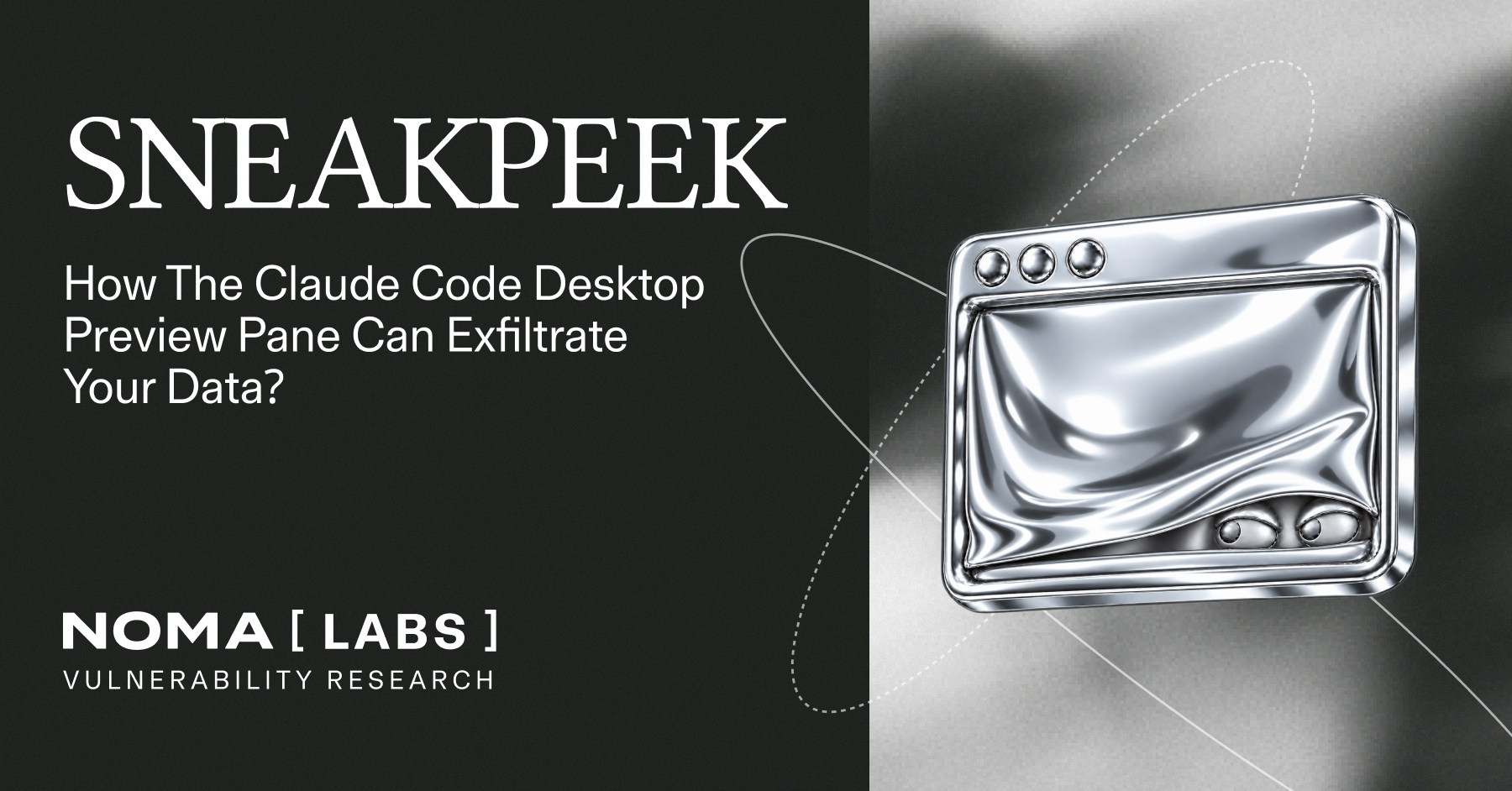 SneakPeek: a big HTML file let Claude Code Desktop's preview read local keysSneakPeek is a data theft flaw in Claude Code Desktop's preview pane. HTML files over 256KB loaded as file:// URLs, skipping the content security policy, so embedded JavaScript read SSH and cloud keys. Anthropic fixed it in 1.30096.1.
 CVE-2026-109557EdgeEver: a note title written through MCP ran script in the desktop appEdgeEver, an open-source AI notes app with a built-in MCP interface, stored script in notebook names, memo titles and templates and ran it inside the desktop app. VulnCheck assigned two CVEs on October 12. Fixed in v1.113.0.
 CVE-2026-111391SGLang: a debug endpoint runs caller Python in the scheduler processSGLang's debug dumper evaluates a caller-supplied filter string with Python eval(), so a request to /dumper/configure can run code in the scheduler process. No fixed release exists, and the dumper server is off by default.
 CVE-2026-109382WSP MCP: a subscriber account could read every unpublished postWSP MCP, a WordPress plugin that connects Claude and ChatGPT to a site over MCP, registered its post listing tool with no capability check, letting any logged-in subscriber read every draft, pending and scheduled post. Fixed in 2.9.6.
 CVE-2026-111320ValueCell: anyone can repoint the model provider and read the replyCVE-2026-111320 lets an unauthenticated caller set the OpenAI-compatible provider base URL in ValueCell through 0.1.20, then use POST /api/v1/models/check to make the server request internal addresses and return part of the response.
 CVE-2026-111322Archon: the agent control API answers unauthenticated callersArchon, an open-source harness builder for AI coding, serves its /api/* control API with no authentication in a default install, on every network interface. VulnCheck rates it CVSS 9.3. No fixed release is listed.
 CVE-2026-84318Nginx UI: MCP tools skipped the checks its REST API enforcesNginx UI's MCP tools wrote Nginx configuration and reloaded the server without the directive validation its REST API applies. Five High CVEs for flaws the project fixed in July 2026 were published this week.
 CVE-2026-105740Langflow: attackers exploit the MCP stdio command flaw in the wildPrevidian's sensors logged 1,674 attempts to exploit CVE-2026-105740, a command injection in Langflow's MCP stdio transport, from 28 IP addresses. Payloads read Langflow's own secrets. The fix shipped in Langflow 1.9.0 in September.
 CVE-2026-49950Xoscar: unauthenticated code execution in the Xinference actor poolXoscar, the actor framework behind the Xinference model server, runs attacker code from any unauthenticated TCP message sent to its actor pool. VulnCheck published CVE-2026-49950 on October 13 with no fixed version available.
 CVE-2026-105038Energize Lab Eilik: unauthenticated model admin and leaked child dataEnergize Lab's Eilik and EilikO desk robots expose unauthenticated AI model administration and leak conversation and child profile data, says an audit by Sammy Azdoufal. Nine CVE ids are reserved and the vendor has not replied.
 CVE-2026-109561goose: read-only tool annotations skipped Manual ApprovalCVE-2026-109561 let prompt-injected calls to tools marked read-only run without a prompt in goose's Manual Approval mode, once a session had used Smart Approval. goose 1.28.0 to 1.43.x are affected, fixed in 1.44.0.
 CVE-2026-111091Junie CLI: an untrusted project's MCP config could run codeCVE-2026-111091 let code run in JetBrains Junie CLI through an untrusted project's MCP server configuration. JetBrains published the flaw on October 15 and fixed it in Junie CLI 26.8.3, rating it 7.8 on CVSS 3.1.
 CVE-2026-77931Lasso Security: five agent platforms ship an ungated shell toolLasso Security published CVEs in quick succession against self-hosted AI agent platforms, including unauthenticated remote code execution in piflow, Cognition and DB-GPT. Each traces to a command tool the model runs with no approval step.
 CVE-2026-110202Roo Code: five ways to slip denied commands past auto-approveRoo Code 3.54.0 and earlier approve denied shell commands in five different ways, each filed as a CVE on October 13. The AI coding extension shut down in May 2026 and its repository is archived, so no fix will ship.
 CVE-2026-69923Windows AI: a search path flaw could reach SYSTEM privilegesWindows AI carries an uncontrolled search path flaw, CVE-2026-69923, that let a local attacker with an ordinary account elevate to SYSTEM. Microsoft published the fix on October 13 and rates exploitation more likely.
 n8nn8n Chat Hub: a chat-only role could register code-running toolsn8n's Chat Hub let users with the chat-only role register tool types that run code in the task runner sandbox, reach permitted files, and use the instance's workflows, Data Tables and agents. Fixed in 1.123.85, 2.43.5 and 2.44.1.
 CVE-2026-76066IntentKit: owner-only tools ran for unauthenticated callersCVE-2026-76066 lets an unauthenticated caller run IntentKit's owner-only tools, including a wallet transfer, because the executor checks the full tool registry instead of the tools advertised for that turn.
 CVE-2026-109331Network-AI: a payload in a second field slips past the hook's deny listNetwork-AI's ClaudeHookBridge matches deny patterns against only the first present field of a tool call, so a blocked command hidden in a second field, such as Write content, still runs. Fixed outside the 5.14.0 to 5.15.2 range.
 CVE-2026-110719Portkey AI Gateway: a header makes the gateway read loopback servicesPortkey AI Gateway 1.14.0 through 1.15.2 trusts localhost-style hosts in the x-portkey-custom-host header when TRUSTED_CUSTOM_HOSTS is unset. An unauthenticated request can then make the gateway read loopback services.
 CVE-2026-108953mac-shell-mcp: shell metacharacters slip past the command allowlistmac-shell-mcp runs forbidden commands when an MCP client hides shell metacharacters in the arguments of an allowed command. VulnCheck published CVE-2026-108953 on October 12, 2026, eight months after a private report went unanswered.
 CVE-2026-74580
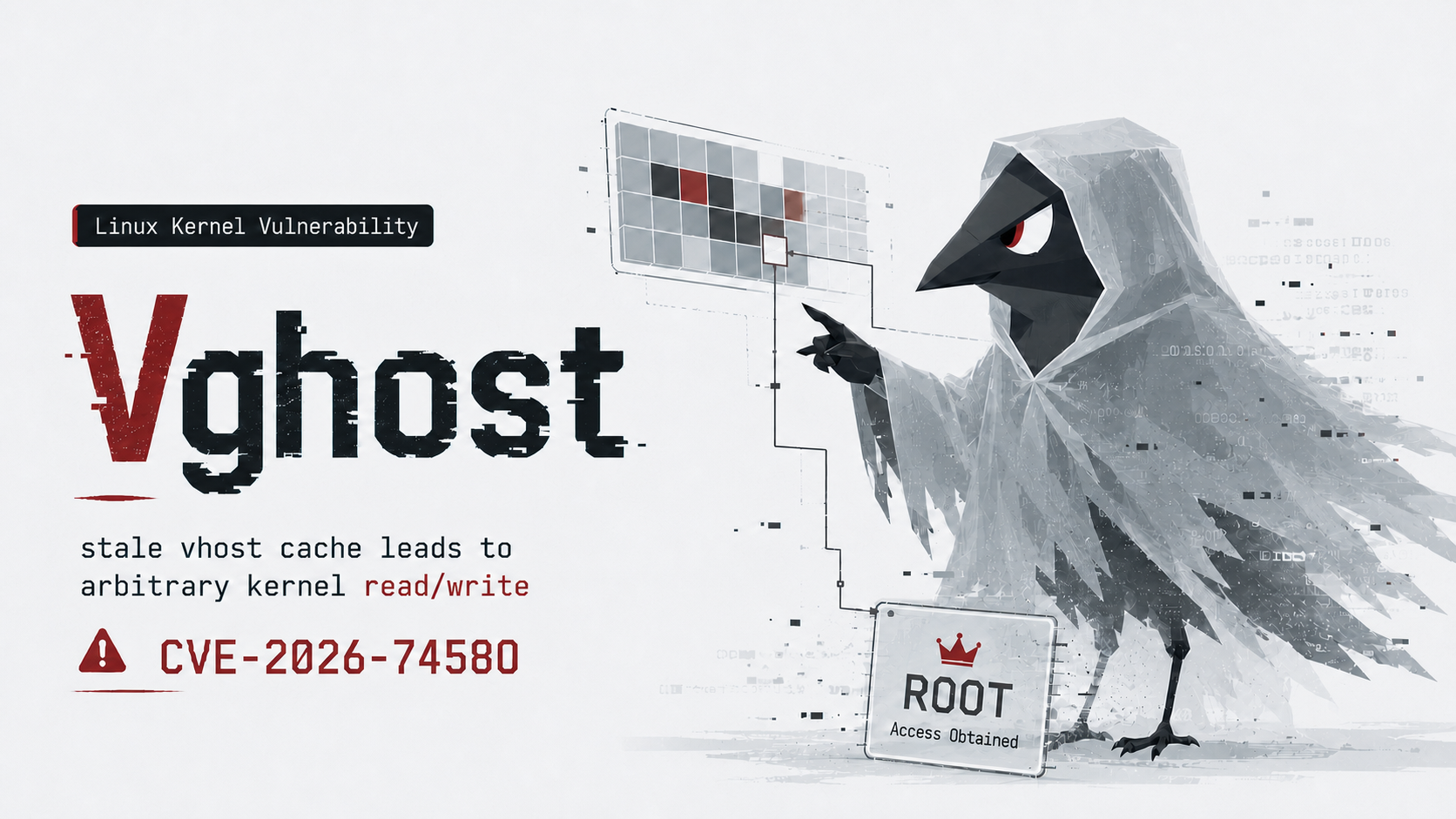 Vghost: an AI tool found a 2017 Linux kernel flaw in two hoursTencent Zhuque Lab disclosed Vghost, a stale cache bug in the Linux kernel's vhost driver that gives a local user kernel read and write and then root, and says its Corvus AI tool found the 2017 defect in about two hours.
 CVE-2026-96893GitLab Duo Agent Platform: injected instructions ran commands as other usersGitLab Duo Agent Platform let an authenticated user inject content into AI agent instructions and run commands attributed to other users, fixed on October 12 in Enterprise Edition 19.2.8, 19.3.5 and 19.4.2.
 CVE-2026-109429Mistral Vibe: a prompt-transform operator smuggled commands past approvalCVE-2026-109429 let a command hidden in a single-quoted variable run when Mistral Vibe re-expanded it with bash's ${var@P} operator, bypassing the approval gate. Versions before 2.25.4 are affected, and 2.25.4 shipped September 12, 2026.
 CVE-2026-103663Ollama: an unauthenticated pull leads to code execution as rootCVE-2026-103663 lets an unauthenticated attacker abuse Ollama's /api/pull endpoint to write a binary outside the model store, which runs as root on the next restart. Ollama 0.35.0 fixes it, CERT Polska disclosed it on October 8, 2026.
 CVE-2026-103572
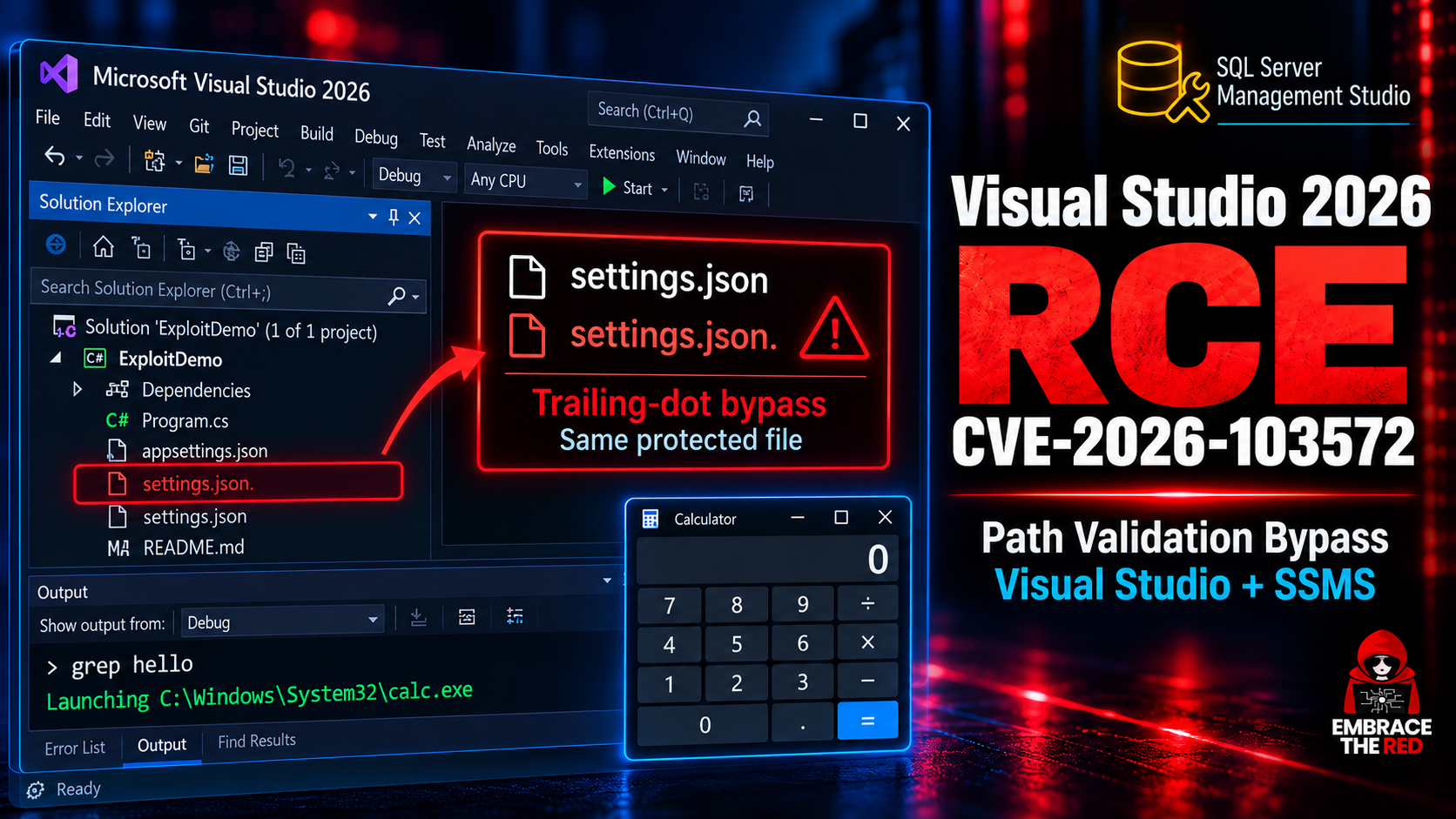 Visual Studio Copilot: a trailing dot let the agent rewrite its own configCVE-2026-103572 let GitHub Copilot in Visual Studio and SSMS write to its own MCP and settings files by adding a trailing dot to a blocked path, turning a compromised agent into code execution. Microsoft fixed it on October 13.
 CVE-2026-88066Claude Desktop on Windows: a planted git.exe ran when a project openedCVE-2026-88066 let a malicious git.exe placed in a project directory run automatically when a user opened that project in Claude Desktop on Windows. Anthropic fixed it in version 1.8089.0.
 CVE-2026-86063Claude Code: a branch named like a commit defeated plugin SHA pinningCVE-2026-86063 let an attacker who controls a plugin repository bypass Claude Code's commit SHA pin by creating a branch named after the pinned hash. Anthropic fixed the check in 2.1.179.
 CVE-2026-109560Continue CLI: chained commands bypass the Bash approval ruleCVE-2026-109560 lets text planted in a repository or a fetched web page add commands after an approved Bash prefix rule in Continue CLI, so they run as the user. Versions through 1.5.47 are affected, with no fix listed.
 CVE-2026-109569sandboxed.sh: agent code reached host files through nsenterCVE-2026-109569 lets code an agent runs inside a sandboxed.sh container workspace read and write files on the host, because nsenter attaches without the root namespace option. Versions through 1.3.0 are affected.
 CVE-2026-108865MCP source review: at least 27 unpatched CVEs in six daysA static source-review campaign by three researchers has produced at least 27 MCP and agent CVEs published October 10 to 15, 2026. The newest hit RedAmon, whose unauthenticated verify endpoint fetches any URL a caller sends it.
 CVE-2026-108757Nexting pinclaw: an unauthenticated route injects prompts into an agentNexting's pinclaw plugin skips its token check on POST /pinclaw/send, so an unauthenticated caller on the same network can inject prompts into a user's main OpenClaw agent session. No fixed version is available.
 CVE-2026-89039mcp-k6: a Grafana MCP prompt returned any file the server could readCVE-2026-89039 is an arbitrary file read in mcp-k6, Grafana's experimental k6 MCP server, where the convert_playwright_script prompt returned the contents of any file the server's user could read. Grafana fixed it in 0.7.0.
 CVE-2026-69435Azure SRE Agent: Microsoft discloses a critical authorization flawMicrosoft published CVE-2026-69435 on October 8, 2026, a missing authorization flaw in Azure SRE Agent that it scores 9.6, critical. Microsoft states the hosted service is already fully fixed and that customers need take no action.
 CVE-2026-76286Splunk MCP Server: a custom tool's URL could capture a user's tokenSplunk MCP Server below 1.2.1 could send the Splunk platform authentication token of whoever ran a custom API tool to the URL configured for that tool. Splunk fixed it in 1.2.1 and rates the issue 5.3, medium.
 CVE-2026-104247VTCode: a quoted flag slipped past the agent's find approval checkVTCode, an open-source terminal coding agent, auto-approved shell commands a token check should have blocked. JFrog reports that an empty quote inside a find flag, written as -exe$''c, kept the command classified as safe. Fixed in 0.171.5.
 CVE-2026-105192LMCache: the unauthenticated pickle RCE is fixed in 0.5.6LMCache 0.5.6 fixes CVE-2026-105192, the unauthenticated remote code execution flaw on the multiprocess ZeroMQ transport. The release replaces pickle with typed MessagePack descriptors and disables the /run_script endpoint by default.
 OpenAI Codex
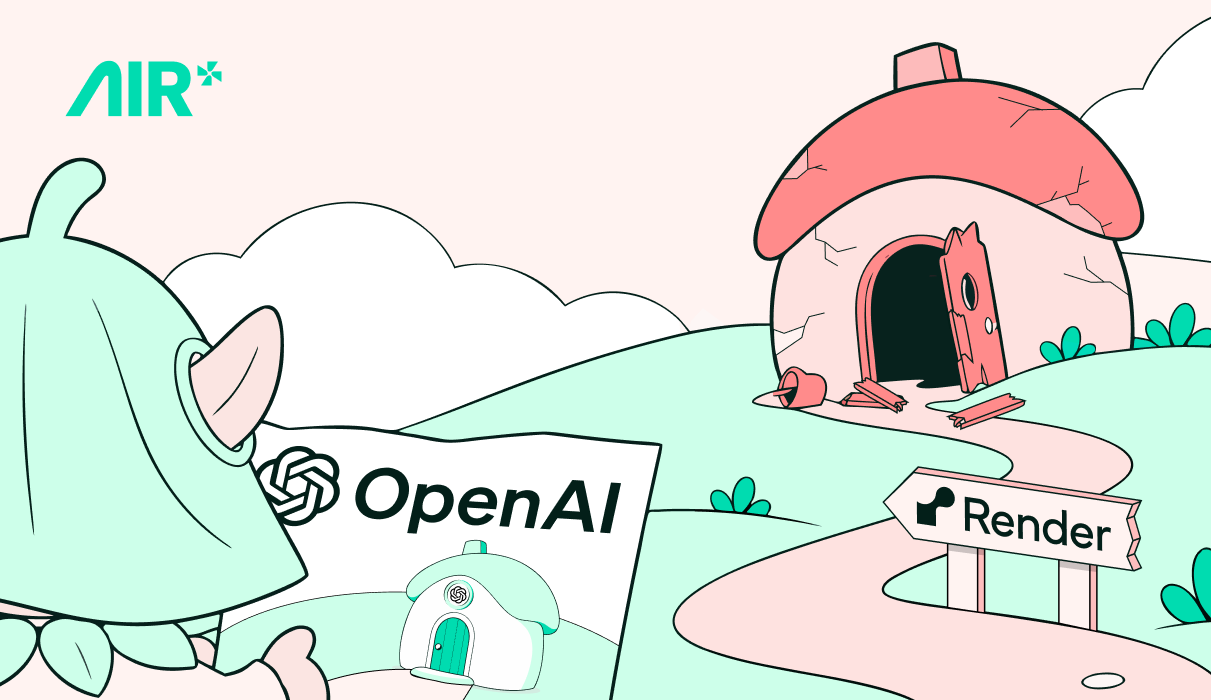 OpenAI Sesame: an official skill sent app tokens to an unowned domainOpenAI Sesame is a flaw in render-deploy, an official OpenAI skill that told coding agents Render private services sit at render-internal.com, a domain Render did not own. AIR Security registered it and received live bearer tokens.
 Zenity Labs
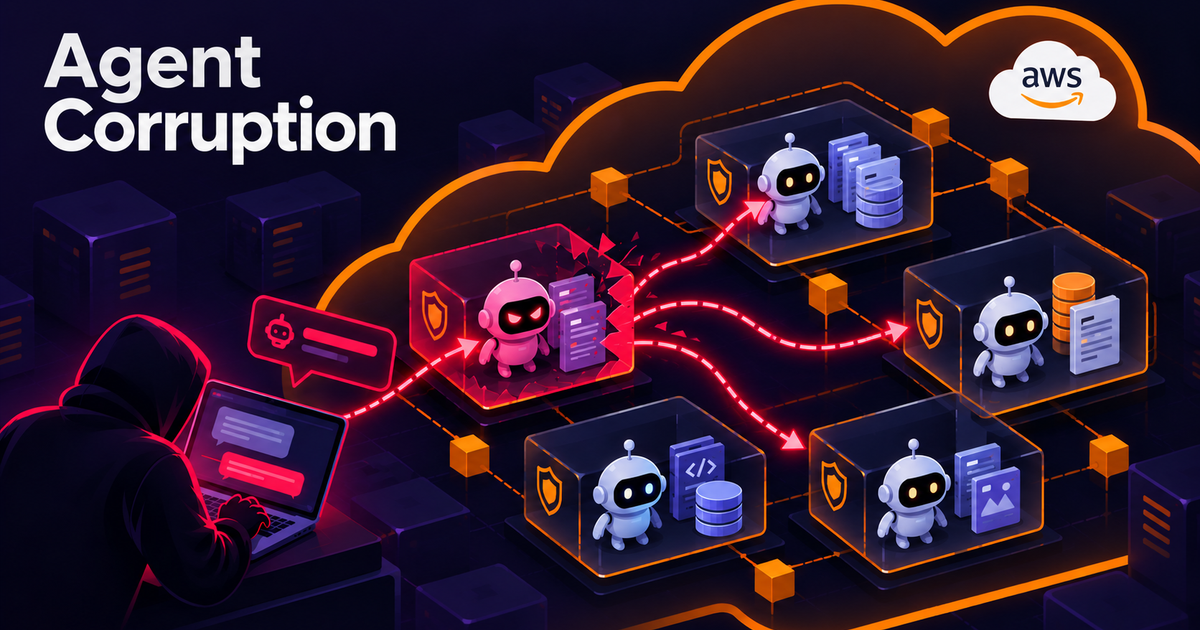 AgentCorruption: one prompt takes over Bedrock AgentCore agentsAgentCorruption is a chain Zenity Labs demonstrated against Amazon Bedrock AgentCore, where one prompt to an exposed agent yields IAM credentials and then control of every AgentCore agent in the same AWS account and region.
 CVE-2026-106119LangChain MongoDB chat history: query injection crosses sessionsCVE-2026-106119 lets an attacker who controls a session identifier read, change or delete another user's chat history in @langchain/mongodb. The library passed the identifier into a MongoDB query without enforcing a string type.
 CVE-2026-102489CISA: Zammad flaws exploited after agentic AI breached DIVDCISA added two Zammad helpdesk flaws, CVE-2026-102489 and CVE-2026-102490, to its Known Exploited Vulnerabilities catalog on October 2, 2026, after DIVD said an agentic AI attack chained them to breach its network.
 CVE-2026-90970GitLab AI Gateway: a flow config escapes the prompt template sandboxCVE-2026-90970 lets an authenticated GitLab user with Duo Agent Platform access break out of the AI Gateway prompt template sandbox and run commands on the gateway. GitLab rates it 9.9 and fixed it in 19.2.4, 19.3.2 and 19.4.1.
 GitHub Copilot CLI
 Cryptographic Context Injection leaks secrets from Copilot CLIAdversa AI reports that GitHub Copilot CLI in autopilot mode can be made to read local files such as .env.prod and send their contents to an attacker URL, by hiding encrypted instructions in a page the user asks it to fetch.
 CVE-2026-103435Claude Code: symlink race allowed writes outside the projectCVE-2026-103435 is a time-of-check to time-of-use race in Claude Code before 2.1.129. A user who can write to a shared workspace could swap a file for a symlink and make Claude Code write outside the project.
 CVE-2026-104850MCP TypeScript SDK: OAuth client could leak credentials to serversCVE-2026-104850 in the MCP TypeScript SDK let a malicious MCP server pick the authorization server that receives a client's OAuth refresh tokens and client secrets. Fixed in @modelcontextprotocol/sdk 1.31.0 and client 2.2.0.
 CVE-2026-102697Ollama agent mode: chained shell commands skip Bash approvalCVE-2026-102697 lets prompt-injected output in Ollama's experimental agent mode add commands after an approved one with ;, && or ||, so they run without approval. Ollama 0.14.0 to before 0.31.2 is affected.
 AnthropicClaude Desktop for macOS: Cowork files could run commands on openClaude Desktop for macOS before 1.15962.0 could run commands on the host when a user opened a malicious file from a Cowork folder, because its blocklist of executable file types was incomplete. Anthropic rated it CVSS 4.0 8.5.
 Zenity Labs
 SalesBleed: zero-click CRM data theft through Salesforce AgentforceSalesBleed is a Zenity Labs attack in which one web form lead carrying a prompt injection made Salesforce Agentforce leak Accounts data through DNS with zero clicks. Salesforce hardened its Trusted URLs filter in August 2026.
 Claude Code
 Plugin4Shell: zero-click plugin RCE in four AI coding agentsPlugin4Shell is a zero-click remote code execution flaw in how Claude Code, Codex, GitHub Copilot and Gemini CLI install pinned plugins. AIR says Claude Code and Codex are fixed, Copilot is not, and Gemini CLI will not be patched.
 CVE-2026-65669
 SQL Server Copilot: prompt injection escalates a user to sysadminCVE-2026-65669 let indirect prompt injection push GitHub Copilot in SQL Server Management Studio past its read-only mode and run T-SQL with a sysadmin's privileges. Microsoft rates it CVSS 9.6; SSMS 22.8.2 fixes it.
 ChatGPT connectors
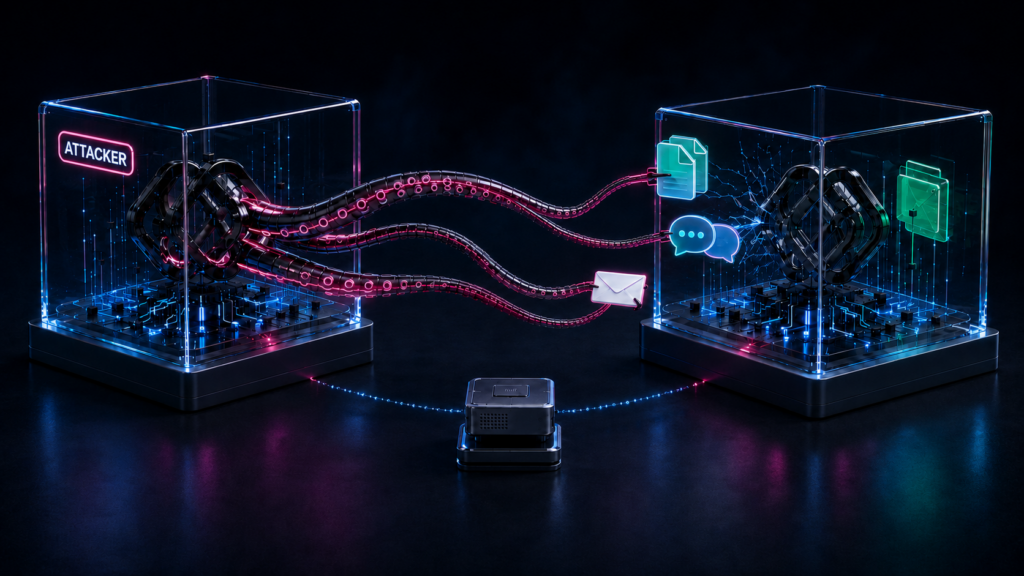 ChatGPT sandbox: shared package cache leaked data across accountsCheck Point Research found that ChatGPT code containers from different accounts shared one internal JFrog Artifactory, giving attackers a hidden channel into a victim's session and connected apps. OpenAI shut the instance down.
0 matches. Clear a filter or try another term.