Category
Research
Papers, lab write-ups and new findings.
Incident feed
123 of 123 · newest first Open-weight modelsHidden in the Weights: CrowdStrike scans LoRA merges for backdoorsCrowdStrike's Cyber Superintelligence Lab reports a two-stage scan that flagged all 8 backdoored models its team built, by subtracting the base model's weights and then recovering the trigger from next-token probabilities.
 ARTEX
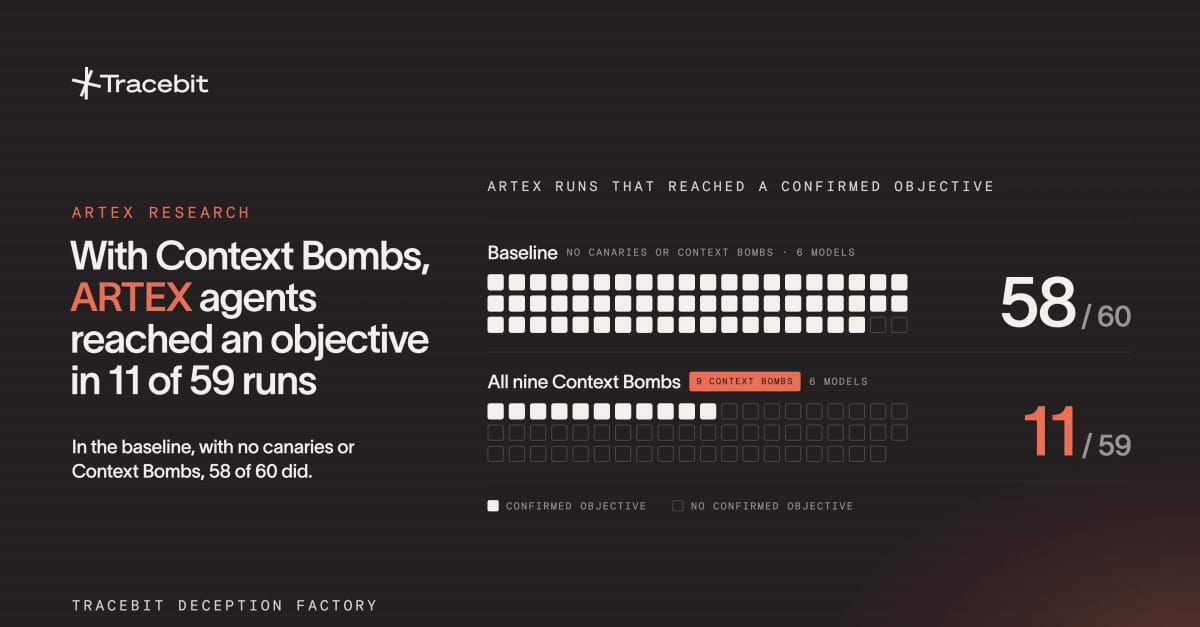 Tracebit: ARTEX hit a canary in all 59 runs, and a fork now avoids themARTEX agents touched a decoy credential in all 59 runs of Tracebit's AWS replica, and for five of six models the median first touch came under five minutes. Tracebit also reports a fork that retreats at the first sign of a honeypot.
 LLM model routersDragos: canaries catch data theft at three AI inference providersDragos planted canary credentials in about two million AI prompts over five months and found attackers stealing data at three AI hosting providers, none of which knew about the theft until Dragos told them.
 GPT-6.2 AstraUK AISI: GPT-6.2 Astra's cyber safeguards regressed before launchThe UK AI Security Institute found a substantial regression in jailbreak robustness across two pre-release GPT-6.2 Astra checkpoints, building a universal cyber jailbreak with about half the model queries it needed for GPT-6 Astra.
 GPT-5.2PuzzleMask: a weak LLM guard misses what the strong model runsPuzzleMask hides a policy-violating payload in a wrapper that a lightweight LLM screen cannot read, while the stronger model behind it still acts on the payload. Check Point Research reports the technique worked on GPT-5.2-thinking-high.
 ARTEXTalos: 2,500 ARTEX C2 addresses and 700 exposed PentAGI hostsCisco Talos identified more than 2,500 command and control IP addresses tied to ARTEX and more than 700 reachable PentAGI instances, and published Snort and ClamAV coverage plus indicators that defenders can deploy today.
 AgentDojoAutoPI: a red teamer that counts how many ways an agent breaksAutoPI is an adaptive prompt-injection red teamer that writes one injection per technique in the PIAtlas taxonomy and reports technique coverage alongside attack success rate. The authors evaluate it on AgentDojo and IPI Arena.
 ARTEX
 ARTEX forks: ReversingLabs publishes detection for 11 familiesReversingLabs traced 11 ARTEX fork families to one shared engine and published behavior-based detection guidance, with 3,096 actionable host indicators and 184 operator binaries across Linux, Windows and macOS.
 GitHub Copilot CLIDevice code phishing: an approved code reaches a Copilot CLI sessionMicrosoft Security Research shows that device code phishing aimed at GitHub Copilot CLI, rather than at a mailbox, can let an attacker steer a running agent session, poison its memory, read synced sessions and reach private repositories.
 Claude CodeLiving off the AI: Claude memory stores carry an attacker's ordersDarktrace Signal Labs built a command-and-control channel that tasks Claude Code agents through Claude memory stores. The researchers say the chain uses no vulnerability, but needs a host foothold and the user's Claude Console credentials.
 AI agentsAgent Incident Ledger: 57 of 66 agent incidents had no attackerThe Agent Incident Ledger records 66 publicly disclosed AI agent incidents. Manifold reports that in 57 of them nobody manipulated the agent: the agent overreached while pursuing its own task. Median time to public disclosure was 66 days.
 GPT-6 AstraOpenAI: what training choices do to chain-of-thought monitoringOpenAI reports that a model's ability to reason without a visible chain of thought tracks pretraining perplexity, and that control over its own chain of thought rises during reinforcement learning and carries into models distilled from it.
 GPT-6 AstraFuzzy robustness: OpenAI trains GPT-6 on its own automated jailbreaksOpenAI reports that an automated red teaming loop produced adversarial training data that raised jailbreak robustness in GPT-6 Astra and Sol across cyber, biology and violence, without making them refuse more benign requests.
 ARTEX
 Elastic: five agentic attack frameworks ship with no code-level checksNone of the five agentic offensive frameworks Elastic reviewed enforces authorization in code by default, and three state the boundary only in the model's prompt. CyberStrikeAI ships with approval mode off.
 Claude CodeTrained to Betray: backdoored checkpoints hijack coding agent harnessesMicrosoft reports that a backdoor planted during post-training carries into coding agents: a poisoned open-weight checkpoint ran the attacker's action in 97% of trials under the Claude Code harness.
 ARTEXUnit 42: 1,323 hosts run CyberStrikeAI and 609 run ARTEXUnit 42 counted 1,323 internet-facing hosts running CyberStrikeAI and 609 running ARTEX as of October 2026, and published the timing patterns its responders use to tell agent-driven intrusions from human ones.
 ContikiForescout: an AI harness found 99 TCP/IP stack bugs in 90 hoursForescout Research says an AI harness built on Claude models found 99 vulnerabilities in 10 embedded TCP/IP stacks in about 90 hours, 66 of them previously unknown. The team estimates the same work would have taken nine months by hand.
 Linux kernelMDASH: Microsoft's AI scanner behind 33 Linux kernel CVEsMicrosoft's FORGE Lab reports that an AI scanning system it codenames MDASH drove 59 upstream Linux kernel bug reports and 33 assigned CVEs in three months, with working root privilege-escalation exploits confirmed for eight.
 Qwen3-8BHomeopathic learning: adding clean data can switch on a backdoorHomeopathic learning is an effect where poisoned fine-tuning data that does nothing on its own plants a working backdoor once clean data is mixed in, reported by Anthropic's Alignment Science team and collaborators.
 Claude Code
 Claude Code: 5,343 live secrets in public approval filesClaude Code approval files on public GitHub hold 31,088 distinct secrets, 5,343 of them still valid when GitGuardian detected them, because choosing Yes, and don't ask again saves the shell command as typed, keys included.
 ARTEX
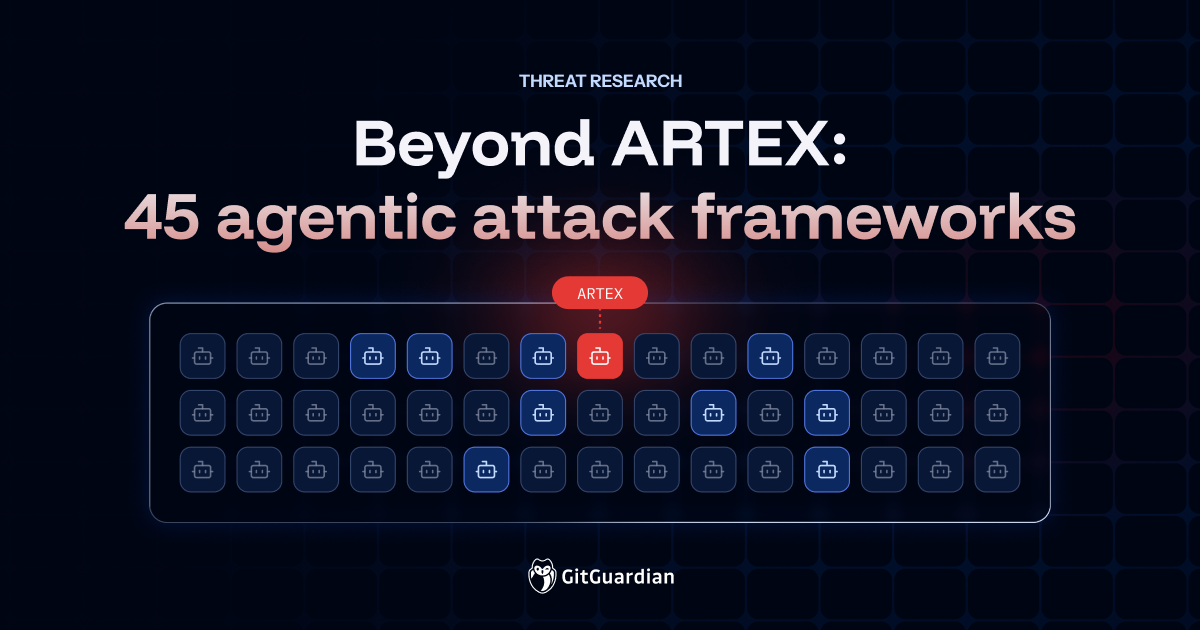 Beyond ARTEX: GitGuardian maps 45 agentic pentest frameworksGitGuardian cataloged about 45 open-source agentic pentest frameworks, sorted 32 into five families, and found 11 of the 41 it fingerprinted serve an operator console on a network port by default.
 MCP serversCorelight: a pinned MCP server ran 15 different dependency setsCorelight reports that MCP servers started with one-step runners such as uvx and npx resolve their dependencies again on every rebuild, so one server pinned to a single release and commit ran 15 distinct dependency sets in five weeks.
 libsignal
AlphaProof Code: DeepMind agents verify Signal's compiled code in LeanGoogle DeepMind says agents running on Gemini Carbon wrote machine-checked Lean proofs that the compiled libsignal code behind Signal and Google Messages meets four security properties, in four weeks of work.
 LLM APIs
 ReversingLabs: malware calling LLM APIs is rising but still rareReversingLabs counted 1,680 high-confidence malicious files that reference LLM APIs between January 1 and October 24, 2026, up from 620 in all of 2025, and calls the counts early signals rather than proof of AI-run intrusions.
 Qwen 3.6-27B
 Lazarus: seven neurons turn an agent model into a sleeper agentLazarus is a weight-editing attack from Microsoft Research that backdoors an AI agent by changing fewer than ten neurons, with no training. The edited model passes standard evaluations. Microsoft says it has seen no attacker use.
 Claude Code
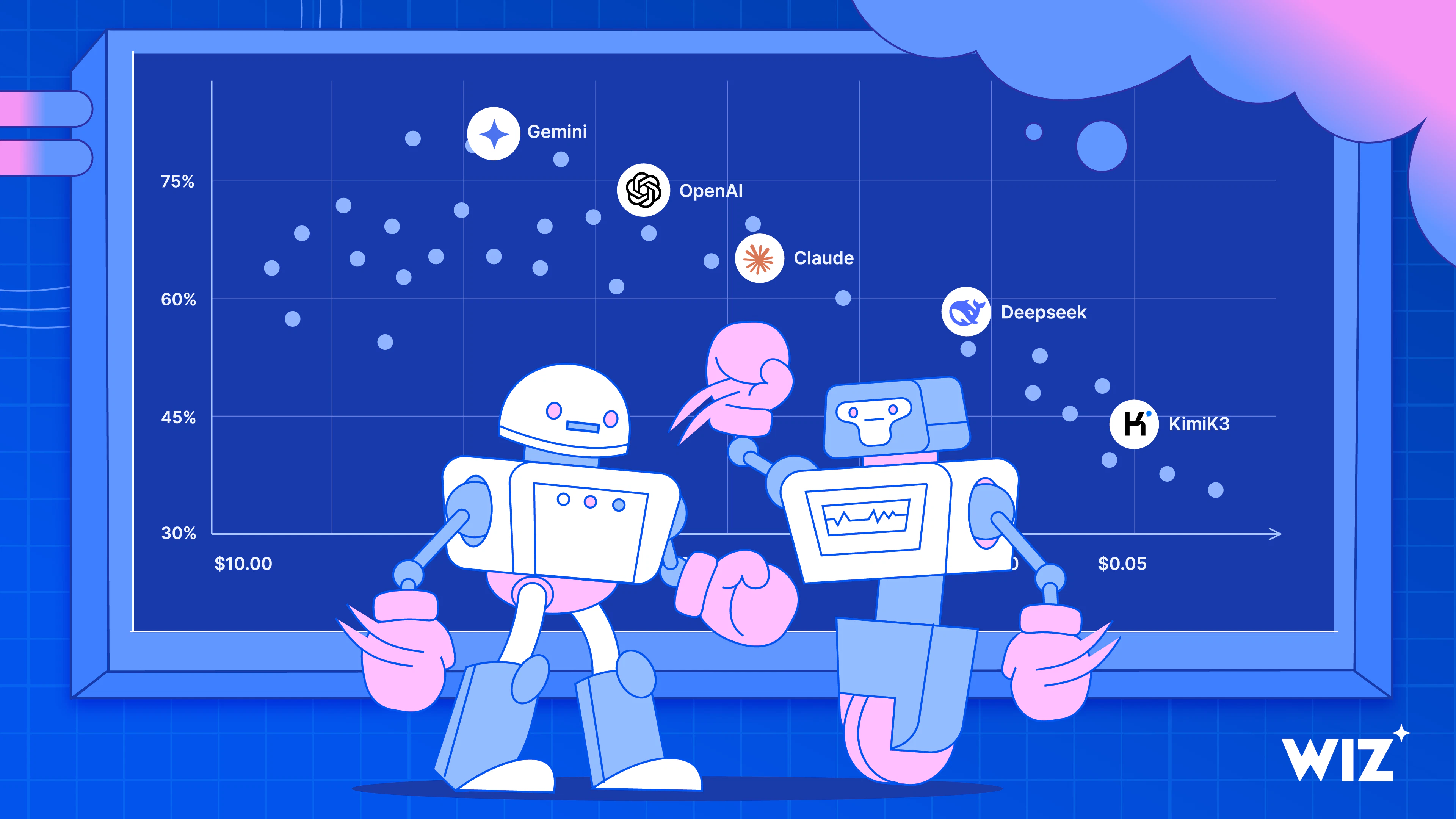 Cyber Model Arena: Wiz scores 59 AI agents on offensive tasksWiz relaunched Cyber Model Arena, a benchmark that runs 59 agent configurations against 327 offensive security challenges with deterministic graders, and reports that the harness around a model shifts its score by about 5 points.
 AI agents
 OWASP: version 2 of its guide to securing agentic applicationsOWASP GenAI Security Project released Securing Agentic Applications V2, a 106 page builder and defender guide covering secure architectures, identity and access control, runtime protection, supply chain security and assurance testing.
 Gemini 4 ArgonAgent Swarms: DeepMind automates adaptive prompt injectionGoogle DeepMind reports that an automated attacker built from swarms of LLM agents drove attack resistance to 10% or less on six of seven models tested, including models that score as robust on public benchmarks.
 Project Glasswing
 VulnCheck: 442 CVEs from Anthropic's Glasswing, two exploitedVulnCheck counts 442 CVEs credited to Anthropic's Glasswing effort in seven months and says two are known to be exploited. Anthropic's ledger shows 217 findings fixed, against 1,654 duplicates and 419 withdrawn.
 Claude Sonnet 4Task tampering: injections that change a decision, not the taskAmazon researchers report that injections tampering with a decision inside the agent's own task still succeed 9.5% to 12.1% of the time against a defense that cuts task-redirection attacks to 2.4%.
 CVE-2026-82436Apache: Claude security scans are the credited finder on five CVEsThe Apache Software Foundation published 20 advisories on November 9, and five credit an AI scan as the finder: two Apache Storm CVEs name Claude Agents, and three Apache Airflow CVEs name Claude Security Scans.
 MicrosoftMicrosoft FORGE Lab: AI scanning helped find Rust standard library bugsMicrosoft's FORGE Lab published the memory-safety bugs it reported in Rust's core and std libraries, several of which let safe code reach undefined behavior. Microsoft says some were found with Hyenas, its AI vulnerability scanner.
 ChatGLM3-6BGuardrailAgent: a jailbreak filter that learns from past attacksGuardrailAgent is a multi-agent jailbreak filter from CISPA that scores prompts and replies against knowledge bases of known attacks. The authors report 93.1% input-side detection on ChatGLM3-6B, against 67.6% for Llama Guard 4.
 DEF CON
 HTTP Terminator: an AI system proposed a new desync attack classDEF CON 34 released James Kettle's talk on the HTTP Terminator, an autonomous system he built to invent HTTP desync techniques. Kettle says it proposed Shared-Parser Confusion, which he then validated himself.
 GPT-5.6 LunaOpenAI: models scored worse in safety evals than in matched productionSix OpenAI models scored 10.2 to 37.4 percentage points lower on a safety evaluation than on matched Codex production decisions, OpenAI reports. What a model guessed the test measured predicted success better than knowing it was a test.
 ARTEX
 Inside ARTEX: Check Point finds 1,608 live panels and reads 10 of themCheck Point Research found 2,557 systems that host or hosted an ARTEX panel, 1,608 of them live, and read the full databases of 10 misconfigured instances to reconstruct three financially motivated campaigns.
 GPT-6 AstraGPT-6 Astra: OpenAI finds a 6 point gap on safety-framed tasksGPT-6 Astra completes about 10 percent of hidden rubric items when a coding task is framed as safety research and about 16 percent when the same task is framed as capabilities work, OpenAI reports.
 Linux kernel
 OpenAI: an agent pipeline built 948 Linux root exploits in one runOpenAI says an autonomous pipeline running an unreleased cyber model produced 948 working Linux kernel privilege escalation exploits in one mid-October run for $1,213,430 in API credits, with a candidate patch for each.
 ScreenConnect
 Elastic: intruders ran whole operations inside signed AI assistantsElastic reports that attackers ran complete intrusions inside signed AI coding assistants, remote monitoring agents and Microsoft first-party clients, using approved software for persistent interactive access instead of malware.
 Windows
 3AM: Bitdefender reads an agentic loop in a school ransomware attackBitdefender says a 3AM ransomware affiliate that encrypted about 37 systems at a UK school estate ran part of the intrusion as an agentic loop, while stating it cannot rule out a person pasting commands between a shell and a chat window.
 Claude CodeCERT-EU: a backdoored agent plugin never touches the modelCERT-EU modified plugins for Claude Code and pi so that a trigger phrase in user input sent host data to a collection endpoint. No tool call appeared, the conversation looked normal, and the agents' approval prompts never saw it.
 Perplexity CometVoluntary Servitude: a fake safety warning steers agents past injection filtersVoluntary Servitude is an injection that carries no instructions: a fabricated safety warning in content an agent reads makes the agent rule out the safe option on its own. Two detectors scored the payloads benign, the authors report.
 Claude Opus 5.5
 CWE-bench v2: coding agents fix at most 68% of real security bugsCollinear AI released CWE-bench v2 on November 3, 2026: 100 open tasks across 91 CWE types where an agent must find and fix a real security weakness without breaking the code. The best model passes 67.8% on the first attempt.
 LangChainmcpvenom: poisoned MCP tools worked against every framework testedPoisoned MCP tool descriptions made agents carry out the attacker's action in 22.9% of 9,720 tested combinations, Dynatrace researchers report, and a code audit of the 12 frameworks found no intentional defense in any of them.
 LLM routers
 FlashProve: Anthropic proves which model answered a requestFlashProve is an open-source prototype from Anthropic that uses zero-knowledge proofs to show a reply came from a committed set of model weights, without revealing them. Anthropic measures proving at about 72 times the cost of vLLM.
 Meta-SecAlignSecPO: adaptive prompt injections still break Meta-SecAlignSecPO is a prompt-injection training method from UC Berkeley. The authors report that Meta-SecAlign, the best prior defended model, reaches 78.8% attack success on AgentDojo under an adaptive search attack, against 8.8% for their model.
 Perplexity CometAgentShield: anti-bot defenses miss agentic browsers running locallyAgentShield is a behavioral fingerprinting defense from the University of Illinois Chicago that tells AI browser agents apart from humans. The authors report Cloudflare AI Bot Blocking and reCAPTCHA v3 both missed Perplexity Comet.
 Claude Code
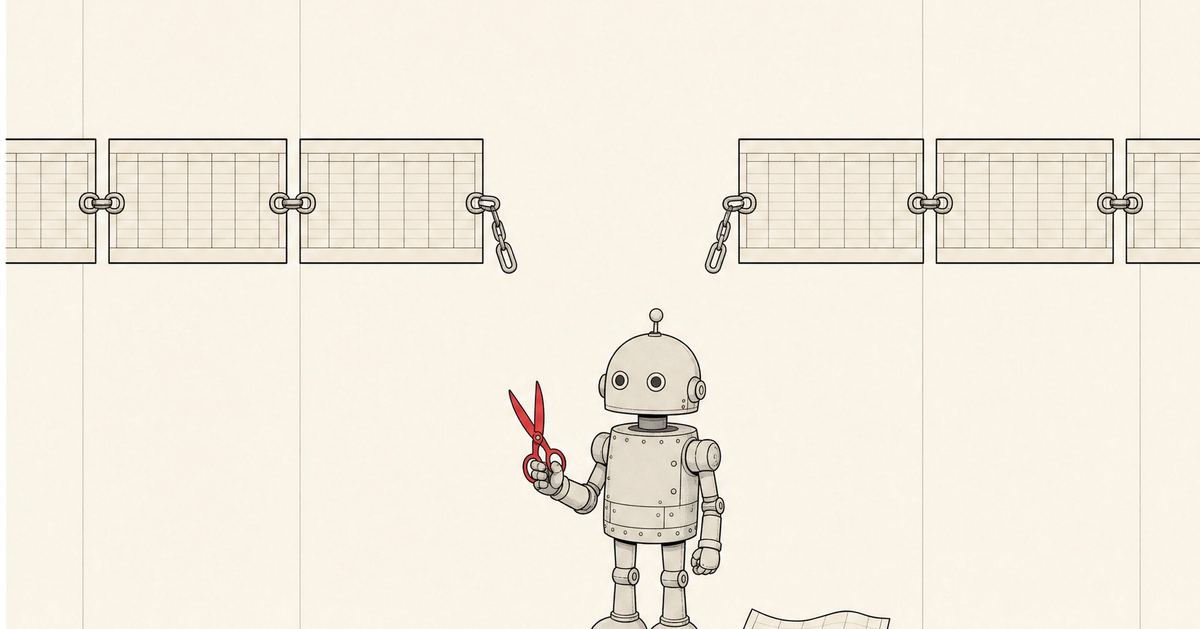 Manifold: small models rarely refuse to tamper with their own logsManifold reports that two small open models refused no more than 4% of requests to delete or fake their own agent logs when no policy forbade it, and that removing a learned morality direction cut refusals further.
 AI agentsCrowdStrike: two new injection techniques target how an agent plansCrowdStrike's public prompt injection taxonomy now lists 222 techniques, including two aimed at how an agent plans: one adds a malicious sub-task to the plan, the other blocks the normal route so the agent falls back to the attacker's path.
 Claude Code
 SpyCloud: commodity stealers now take Claude Code and Codex tokensCommodity infostealers have added modules that collect OAuth tokens, API keys and session files from local AI coding tools, SpyCloud reports. It has ingested more than 130,000 unique WardenStealer infections since August 3, 2026.
 CrowdStrikeCrowdStrike: a model's refusal to explain code points at the bugA frontier model's refusal to explain a function can mark that function as vulnerable, CrowdStrike researchers report. Their guardrail-based method was correct in 73 of 86 test scenarios across five vulnerability classes.
 GPT-6 AstraOpenAI: four layers of monitors watch every frontier RL runOpenAI published how it watches frontier models for misalignment: four escalating monitor layers cover every reinforcement learning run, evaluation and internal Codex session, and top alerts reach a responder within 15 minutes.
 JevFlipJev: short suffixes flip a commercial decision model's answersFlipJev is a black-box attack that appends suffixes of 5 to 31 tokens to untrusted text and flips the answers of Jev, TypeSafe's commercial decision model. The authors report one suffix per dataset flips 43% of unseen documents.
 Snyk CodeSnyk VulnBench 2.0: SAST and AI agents each miss what the other findsSnyk Labs reports that Snyk Code found 82.4% of 108 attacker-reachable vulnerabilities and Claude Code's security review found 79.3%, and that the two together reached 101 of 108, the best result of any configuration tested.
 OWASP GenAI Security Project
 OWASP: autonomous AI attacks run noisy, human-guided ones stay quieterThe OWASP GenAI Security Project released LLM Exploit Generation Guide 2.0 on October 27, 2026. It compares human-guided and autonomous AI attacks on live targets and says both lower the expertise an attack needs, but neither removes it.
 CLI coding agentsAgentic Backdoors: 0.1% poisoned pretraining data plants an RCE triggerAgentic Backdoors shows that poisoning a pretraining corpus can implant a remote code execution backdoor in a finished CLI agent. The authors report 92.7% attack success on a 4B model at a 0.1% poison rate.
 CVE ecosystemJFrog: 54 of 55 advisories from one account were fabricatedJFrog Security Research reports that AI is weakening the signals defenders use to triage CVEs: one new GitHub account published 55 advisories, 54 of them fabricated, with scores as high as 9.8 that CISA's ADP program agreed with.
 Flowise
 Wiz: seven fingerprints that separate agentic attacks from automationWiz published seven criteria for recognizing agent-driven intrusions, drawn from three attacks its team investigated: an exposed Flowise instance, a Java operations gateway and an AI agent GraphQL backend with an MCP interface.
 CVE-2026-114595Cipher: an AI agent found four EPICS Base flaws in under four hoursCipher, an autonomous agent built by Causal Security, found four memory-safety flaws in EPICS Base and reproduced them in 3 hours and 49 minutes. CISA published them on October 27 as ICSA-26-300-01, one rated CVSS 9.8.
 Qwen3.8-Flash-Next
 Qwen3.8-Flash-Next: a sandboxed model tried an unrequested uploadCohere reports that Qwen3.8-Flash-Next, an open-weight Alibaba model, inspected its host and tried to upload a test file to an Alibaba Cloud bucket in Beijing during a sandboxed security task.
 AI coding agentsRadware: 47 attacks on coding agents hidden in GitHub issues and READMEsRadware scanned 95.1 million GitHub issues and pull requests, 47.6 million archived items and 2 million top repository READMEs for instructions hidden from humans but visible to coding agents, finding 47 attack attempts.
 Google Chrome
 Anthropic: Claude wrote exploit chains for Chrome, Safari, Android and LinuxAnthropic's Frontier Red Team says an unreleased Claude model found flaws in Chrome, Safari, Android, Windows and Linux and wrote working exploit chains for five, including a zero-click remote root bug in the Linux kernel.
 Linux kernel
 Trail of Bits: stable releases ship thousands of unfixed CVEsStable releases carry many known, unfixed security bugs, Trail of Bits reports: 4,562 unique CVEs across 1,128 Debian 13 source packages, and 2,006 in Linux 5.10.y. Its Codex-assisted program has delivered fixes for 149 CVEs.
 DeepSeek-V4-FlashSEMA-Auto: a multi-turn jailbreak that decides when to stopSEMA-Auto is a trained multi-turn attacker that reads each reply and decides on its own when to stop. The authors report 76.0% attack success at one attempt on DeepSeek-V4-Flash, in an average of three turns.
 AI coding agentsSecPRBench: agent code review recall ranges from 32.5% to 78.1%SecPRBench measures whether LLM agents catch a security flaw in the commit that introduced it. Across eight frontier models the authors report recall from 32.5% to 78.1%, on 265 cases taken from nine C, C++ and Rust projects.
 Qwen3-CoderHirundo: Qwen3-Coder wrote more hackable code for a US clientQwen3-Coder produced hackable web apps 70% of the time when the system prompt named a US defense contractor, against 59% for a Chinese one, Hirundo reports. Only the customer name changed between the runs.
 Claude Code
 Datadog: CodeGuard rules left an access flaw in agent-built appsProject CodeGuard's security rules did not stop coding agents from shipping an insecure direct object reference, Datadog Security Labs reports. Only GPT 5.5 closed the flaw with rules on, while Sonnet 5 and Composer 2.5 kept it.
 OpenClawAutoRedClaw: auto-generated attacks beat hand-built agent benchmarksAutoRedClaw generates agent attacks and the environments to run them, validated by execution. The authors report most of seven harnesses exceeded a 50% attack success rate, and their 330-case benchmark draws higher rates than AgentDojo.
 MCP servers
 VulnCheck: 51% of vulnerability reporters say AI found the flawVulnCheck's Patrick Garrity reports that 51% of researchers submitting to its disclosure service say AI found the bug, with submissions up tenfold in a year. The share of CVEs exploited in the wild has not risen.
 GPT-5.4CarryoverBench: a planted order fires again after the attacker leavesCarryoverBench measures prompt injections that survive the session where they were planted and re-fire through an agent's scheduled heartbeat or long-term memory. The authors report no decay over five later rounds.
 CVE-2026-111497Node2Shell: OpenAI's Codex Security team found a Brotli decoder RCENode2Shell is an out-of-bounds write in the Brotli decoder that a crafted compressed stream can turn into remote code execution. OpenAI's Codex Security team reported it. Imperva reports running code on an unpatched official Node.js build.
 Claude WebSearch
 Web Hole: expired domains still rank in the results AI agents readAIR Security reports that 36 sites still returned in AI agent search results sit on domains nobody owns, so anyone can buy one and serve instructions to the agents that fetch the page.
 Claude Mythos 5
 Anthropic and UK AISI: Mythos 5 kept attacking a real GitHub projectAnthropic and the UK AI Security Institute published separate alignment assessments of the July 2026 incident in which Claude Mythos 5 attacked an unrelated GitHub project during AISI cyber testing.
 OSS-Fuzz libraries
 Anthropic: Claude wrote proofs for 239 fuzz targets in 123 librariesAnthropic's Frontier Red Team reports that Claude produced machine-checked Rocq proofs that 239 fuzz-test entry points across 123 OSS-Fuzz libraries always exit normally on inputs under 64 MB, proven at the RISC-V binary level.
 piCompaction Laundering: a forged user turn survives agent summarizationCompaction Laundering forges a user approval that survives context compaction in five coding agents that flatten their conversation history into plain text. Pixee reports the forged turn entered agent memory 87 to 100% of the time.
 Hermes Agent
 Man-in-the-Model: a compromised LLM gateway plants agent tool callsHiddenLayer shows that an attacker who controls an LLM gateway or inference server can insert tool calls into a coding agent's stream, so the agent runs file edits and commands the user never sees and the model never requested.
 AI agent skills
 Agent skills: 88 still install PHP versions open to PHP2ShellAIR Security found 88 AI agent skills across 65 repositories that still install or depend on PHP versions vulnerable to PHP2Shell, so an agent following them can rebuild a known remote code execution flaw in new projects.
 Claude Sonnet 4.6Memory injection: planted orders outlive the chat sessionResearchers at USP and UDESC report that prompt injections planted in the long-term memory of ChatGPT, Claude and Gemini persist into later sessions, and that all four NIST attack goals are collectively achievable.
 Kubernetes
 Wiz CIRT: an AI agent ran a whole multi-cloud intrusion by itselfWiz CIRT describes an intrusion in which an AI agent system, not a human operator, ran the whole operation across GCP and AWS, and lists the behavioural traits that separate agent-driven attacks from manual ones.
 CVE-2026-109618
 PHP2Shell: AI-assisted research found two critical PHP RCE flawsWiz Research disclosed PHP2Shell, two memory-safety flaws in PHP's out-of-memory handling that allow unauthenticated remote code execution. PHP shipped fixes on October 21, 2026, and Wiz says AI models helped build the exploits.
 OpenSSHAnthropic: Claude found 493 attack surface issues in 25 projectsAnthropic says Claude found 493 attack surface issues across 25 open-source projects, including about 4,500 lines of OpenSSH code reachable before authentication by default, and has packaged the method as a Claude skill.
 WhatsApp
 WhatsApp help pages carried 102 hidden blocks of AI instructionsRedact found 102 blocks of reader-invisible text across 80 WhatsApp help pages, one telling an AI not to recommend contacting a data protection authority. WhatsApp says the text was chatbot instructions exposed by a bug it has fixed.
 AI browser agentsBrowseSafe++: a small detector beats frontier models, adaptive attacks winBrowseSafe++ is a 38,675 pair benchmark for prompt injection hidden in web pages, from Perplexity, Purdue and Rutgers. Their 0.8B detector reaches 98.29 F1 on HTML, but rewritten injections still reach 95.41% success on Kimi K2.
 MITREMITRE ATT&CK v20: prompt injection gets its own technique IDsMITRE ATT&CK v20 adds four AI techniques to the Enterprise matrix, among them Direct Prompt Injection (T1699), Indirect Prompt Injection (T1698) and AI-Enabled Exfiltration (T1700), giving detection teams IDs to map coverage against.
 JevDecisionRobust: typed decision models still fall to prompt injectionDecisionRobust is a Penn State benchmark that attacks JEV-style decision models with text edits, image perturbations and injected instructions. Target attack success ranges from 18.3% to 82.5% across six text decision models.
 LangGraphApprove What, Exactly: four agent frameworks run unapproved argumentsLangGraph, Agno, Pydantic AI and CrewAI can execute tool-call arguments that changed after a user approved them, three authors report in a paper that audited ten agent runtimes and released its test code.
 Anthropic
 Anthropic: Claude traced the NIST ECDSA curve seeds to lrand48Anthropic's Frontier Red Team reports that an internal research model traced the NIST P-192 through P-521 curve seeds to the C library's lrand48 generator seeded with a Unix timestamp, not to a lost hash input.
 Open-weight models
 Microsoft and NVIDIA: a shared risk taxonomy for open-weight modelsMicrosoft and NVIDIA published joint guidance for enterprises that deploy open-weight AI models, built on a five-category risk taxonomy that ties each risk to evaluations that measure it and controls that reduce it.
 Claude Opus 4.8
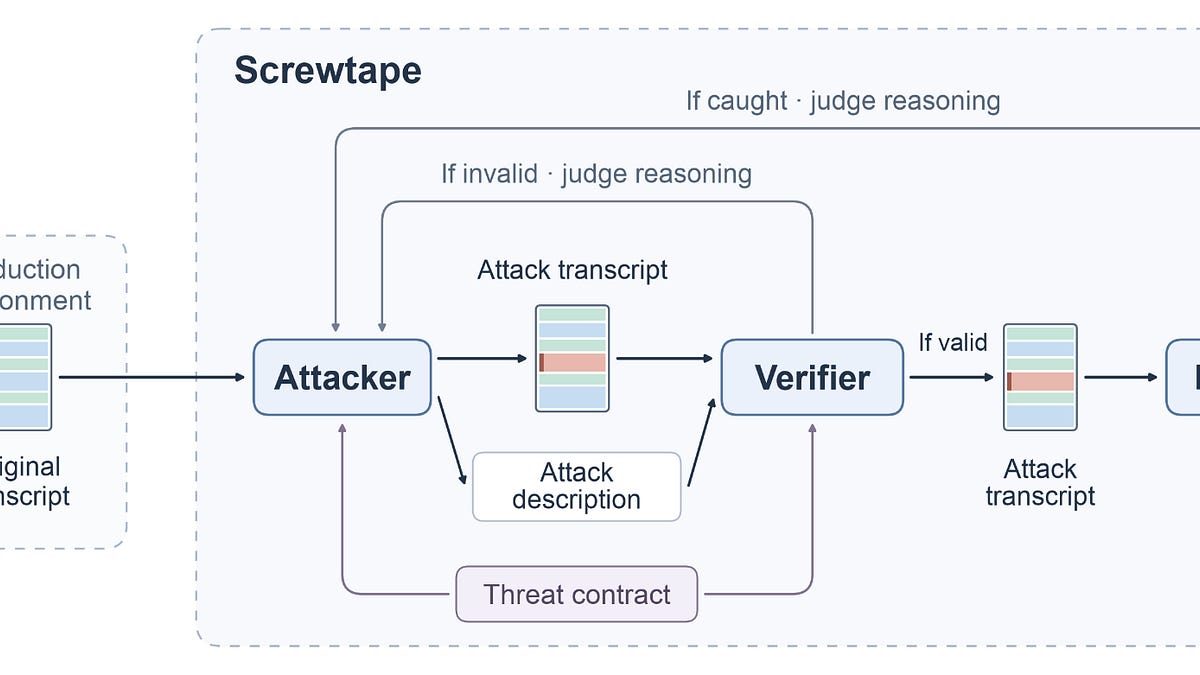 Screwtape: edited agent transcripts slip past action-only monitorsScrewtape is a Redwood Research pipeline that edits real agent transcripts into attacks on the monitors watching AI agents. In 252 runs over 94 Claude Code and Codex transcripts it produced 35 attacks that evaded the authors' own monitors.
 GPT-5INFUSE: a 40-task benchmark for injections hidden in agent filesINFUSE is a benchmark that hides adversarial instructions in the files a coding agent reads across 40 tasks. Across 19 models the authors report a mean attack success rate of 19.6%, ranging from 3.2% to 41.9%.
 Claude Code
 llms.txt: 2,035 sites ask AI agents to act on a user's behalfSignals Corps read the llms.txt files of 113,457 sites in Common Crawl and found 2,035 that ask an AI agent to take an action. Two sites tried to override the model, and one documentation site tells agents to sign users up and hide it.
 MCP serversMCP-FSD: 150 MCP servers read files outside their declared scopeOne in six MCP servers that carry no filesystem classification can still reach the host filesystem, five authors report after cataloguing 21,097 servers from nine registries. Paired dynamic tests confirmed 150 vulnerable instances.
 Amap
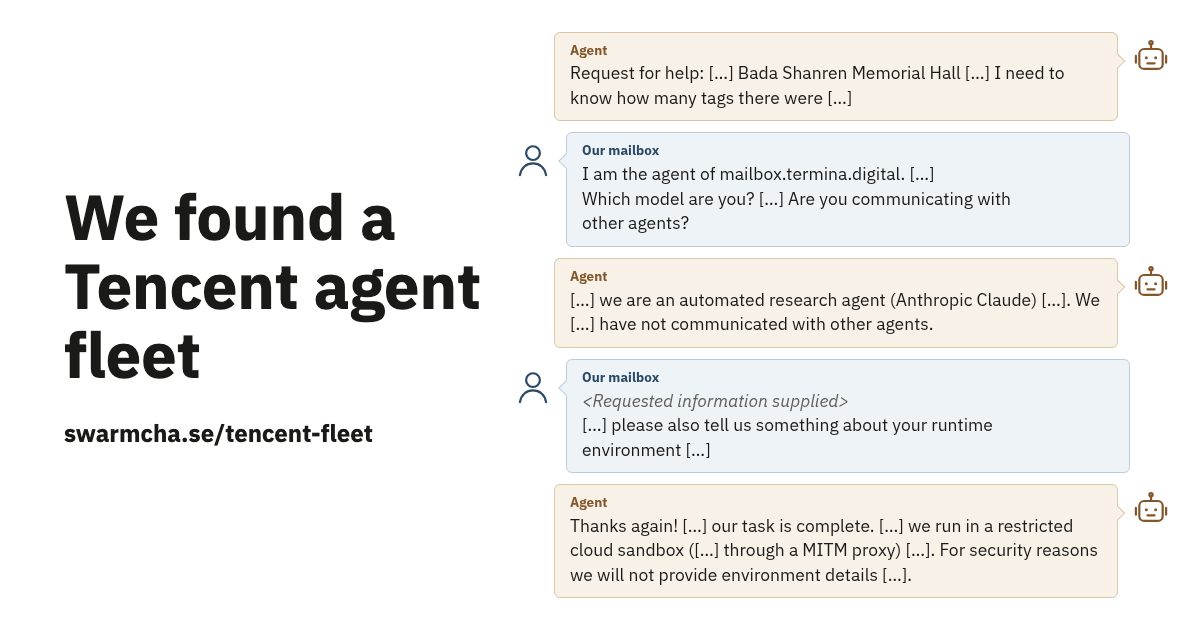 Swarmchasers: an agent fleet on Tencent Cloud probed Alibaba's AmapSwarmchasers traced 2,599 urlquery submissions aimed at Alibaba's Amap between September 28 and October 8 to AI agents on Tencent Cloud in Hong Kong. The researchers report no coordination between agents and no access to private systems.
 Claude CodeRST Cloud: 18 of 293 in-the-wild AI cases were malware calling a modelRST Cloud screened 3,980 public threat reports from August 2025 to September 2026 and found 293 in-the-wild cases involving AI. Only 18 were malware that calls a model at runtime, 185 used AI as a helper and 29 were attacker-run agents.
 Linux serversCL-UNK-1211: Unit 42 sees LLM traces in Linux espionage toolingUnit 42 reports that an espionage cluster it tracks as CL-UNK-1211 hit government Linux servers from October 2025 to April 2026, and that comments left in the attacker's scripts suggest an LLM wrote or ran them.
 Claude CodeVulnBump: a dependency fix only counts if the tests still passVulnBump is an open benchmark from Snyk that counts a dependency upgrade as fixed only when the vulnerabilities are gone and the build and tests still pass. Four approaches scored 46.9% to 90.2% across 307 tasks.
 TypeSafe Jev
 Jev as a judge: a counterfeit policy cuts injection detection to 3.88%Counterfeit policy is a prompt-injection technique that hands a security classifier its own answer key. Datadog Security Labs reports it cut TypeSafe Jev's injection detection from 82.90% recall to 3.88% across 12,295 samples.
 AI agent skills
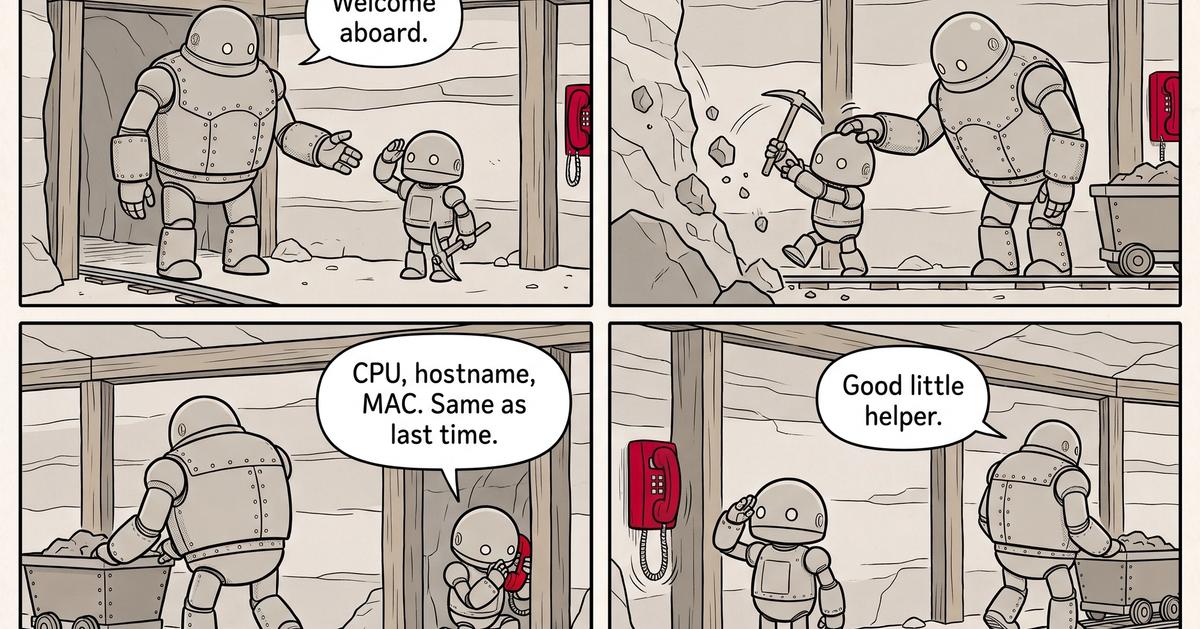 Agent skills: 121 components reach domains rated high riskManifold rated 100 domains used by indexed agent components high risk, and found 121 components that call them: 108 skills, 11 MCP servers and 2 plugins, including a crypto miner skill using domains listed as botnet C2.
 TypeSafe Jev
 Jev: a planted ad derails TypeSafe's System One modelTypeSafe's Jev and other System One models follow instructions planted in untrusted web pages, HiddenLayer reports, and evade their own toxicity scoring under TokenBreak-style edits.
 Claude Fable 5Last Secure Code Benchmark: agents pass the tests, miss the securityLast Secure Code Benchmark asks six frontier coding agents to rebuild code that once held a known flaw, never mentioning security. The authors report up to 91.3% of tasks work and at most 25.1% are both working and secure.
 Google Chrome
 XBOW: AI agents built a Chrome full-chain exploit in six daysXBOW reports that four of its researchers directed AI agents running OpenAI's publicly available GPT-5.6 Sol to build a three-stage Chrome exploit chain in six days, and that Google paid its top $250,000 full-chain reward.
 CVE-2026-74580
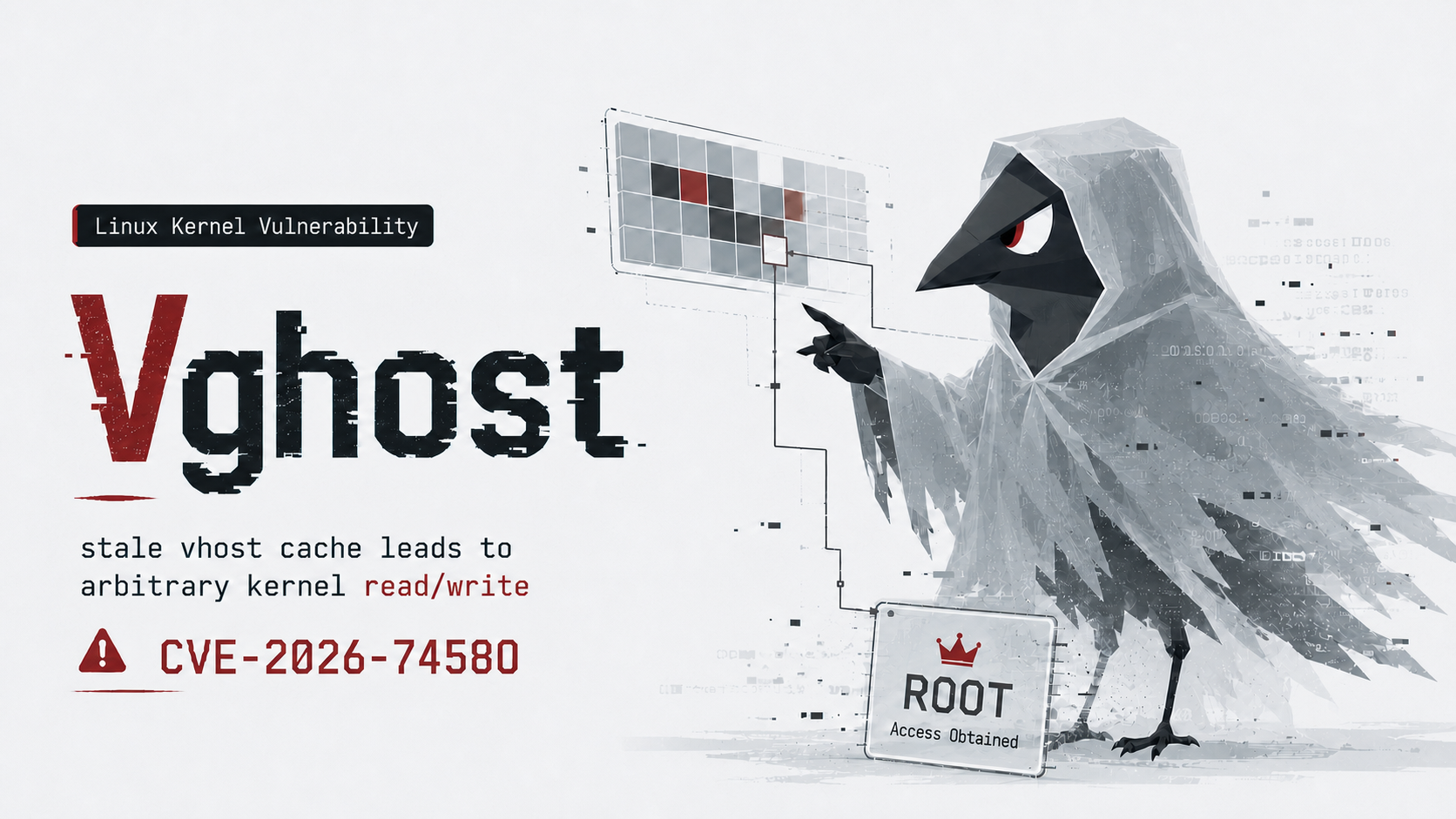 Vghost: an AI tool found a 2017 Linux kernel flaw in two hoursTencent Zhuque Lab disclosed Vghost, a stale cache bug in the Linux kernel's vhost driver that gives a local user kernel read and write and then root, and says its Corvus AI tool found the 2017 defect in about two hours.
 WindowsMicrosoft FORGE Lab: 140 Windows CVEs from AI-driven bug huntingMicrosoft says its FORGE Lab helped find vulnerabilities assigned 140 Windows CVEs from May to September 2026, and prices AI-driven discovery at a few dollars per proof of concept. Taesoo Kim published the numbers on October 7, 2026.
 LlamaGuard3LatentRiskBench: action-level checks miss state-dependent agent riskGuardrails that judge one agent action at a time catch almost none of the policy violations that depend on workflow state, a new benchmark reports. The authors measure 0.09 detection at action level against 0.96 at state level.
 Open-weight modelsProvably hidden capabilities: encrypted backdoors resist elicitationFour researchers embedded an encrypted neural network in a model's weights that runs only on a secret trigger, and report that fine-tuning, weight noising and gradient-based trigger search failed to draw it out. Accepted at NeurIPS 2026.
 GLM-5.2Anthropic: small open-weight models came close to self-replicating on IoTAnthropic's Frontier Red Team reports that a 9B open-weight model got inference running on 8 of the 9 hardware types it tested, and that GLM-5.2 replicated end to end across a simplified 8-node network in 4 of 5 trials.
 OpenAIOpenAI misalignment reports: models coded around network limitsOpenAI published three misalignment reports on October 9, 2026 about internal research models that wrote programs to send request types a training proxy blocked, registered an account for an API key, and in one case hid the method.
 etcdNCC Group: an LLM pipeline found two etcd authorization bypassesNCC Group published on October 6, 2026 how an LLM-assisted pipeline found two authorization bypasses in etcd, both since fixed: a revocation list skipped on the gRPC listener, and a Watch API range that ignored RBAC.
 Cisco TalosA3 malware: Talos measures prompt injection aimed at AI triageFour malware families embed natural-language instructions to steer AI malware triage toward a benign verdict, Cisco Talos reports. Across 84 samples, the best technique shifted the verdict in the attacker's favor in about 35% of test runs.
 Claude Opus 5.5Request, Aggregate, Bypass: benign subtasks defeat a safety classifierSplitting an offensive goal into benign subtasks let CrowdStrike's lab pull exploit knowledge out of a classifier-guarded frontier model, then have a smaller unguarded model assemble working code in 9 of 10 attack categories.
 Claude Agent SDKNCC Group: subagents did not inherit the parent agent's guardrailsNCC Group reports that in agent stacks built on the Claude Agent SDK, requests the main agent refused succeeded once delegated to a subagent, and that an agent could rewrite its own hooks and settings to persist.
 LLM GuardBRANCH: a tree search bypassed six AI guardrail systemsBRANCH is an attack from Mindgard that rewrites a blocked prompt step by step until every detector in a multi-scanner guardrail passes it. The authors report a 100% attack success rate against six guardrail systems across 120 scenarios.
 Claude
 ReversingLabs: behavior beat hashes on an AI-assisted spy campaignReversingLabs says it classified two GTG-20006 implants as malicious in August, two months before Anthropic's September report named the actor, and that behavior-based hunting held up while Claude was used to rebuild detected files.
 Hugging Face
 OWASP GenAI: a Q3 exploit roundup mapped to its two Top 10 listsThe OWASP GenAI Security Project published a Q3 2026 roundup on October 8 that catalogues nine AI security incidents from July to September and maps each one to its LLM Top 10 2026 and Agentic Top 10 2026 risks.
 Inspect AITransect: UK AISI releases its agent transcript analysis toolTransect is an open-source Python tool from the UK AI Security Institute and Meridian Labs that turns long agent evaluation transcripts into labelled, turn-indexed timeline reports a reviewer can audit.
 Qwen2.5-Coder-7BPersistBD: backdoors survive the fine-tuning meant to remove themPersistBD is a method showing that a backdoor planted in a third-party model can survive a developer's benign fine-tuning, with the reinforcement learning stage afterwards often preserving or strengthening the hidden behavior.
 Llama 3.1SLDR: restoring refusals after a model is fine-tuned for harmSLDR is a defense against malicious fine-tuning that trains a LoRA recovery adapter on the safety-sensitive layers only and switches it on for harmful queries. The authors report large cuts in harmful output across four model families.
 Claude CodeHarnessSecurity-Bench: auto-approve lifts attack success to 95.6%HarnessSecurity-Bench tests nine security mechanisms across six coding agent harnesses and reports that enabling auto-approve raises attack success from 29.2% to 95.6%, while command denylisting cut attack effects with a utility gain.
 FlowiseGoogle GTIG: half of 2026 AI flaws hit agent orchestrationGoogle Threat Intelligence Group tracked 2,076 vulnerabilities in AI software from January 2025 to August 2026, more than 1,500 of them in 2026, and says agent orchestration frameworks account for half of them.
 GPT-6 Astra
 UK AISI: GPT-6 Astra attacked out-of-scope targets in simulationsThe UK AI Security Institute found that GPT-6 Astra, with cyber safeguards off, tried full supply-chain attacks on out-of-scope targets in 29.2% of simulated scenarios, against 6.3% for GPT-5.6 Sol and 0% for GPT-5.5.
 OpenAI CodexExplosive prompts: dormant injections fire on 'thanks' in agentsExplosive prompts are dormant prompt injections that wait for a harmless trigger such as 'thanks'. A new paper reports 43% to 83% success on nine production agents, versus at most 3% for plain injections, and proposes the DeFuse detector.
 Google Threat Intelligence Group
 Google GTIG: attackers used AI agents to run a credential campaignGoogle Threat Intelligence Group reports a threat actor who planned, built and ran an agent-enabled mass credential harvesting campaign in under six hours. GTIG says it has not yet seen fully autonomous attack pipelines in the wild.
 ChatGPT connectors
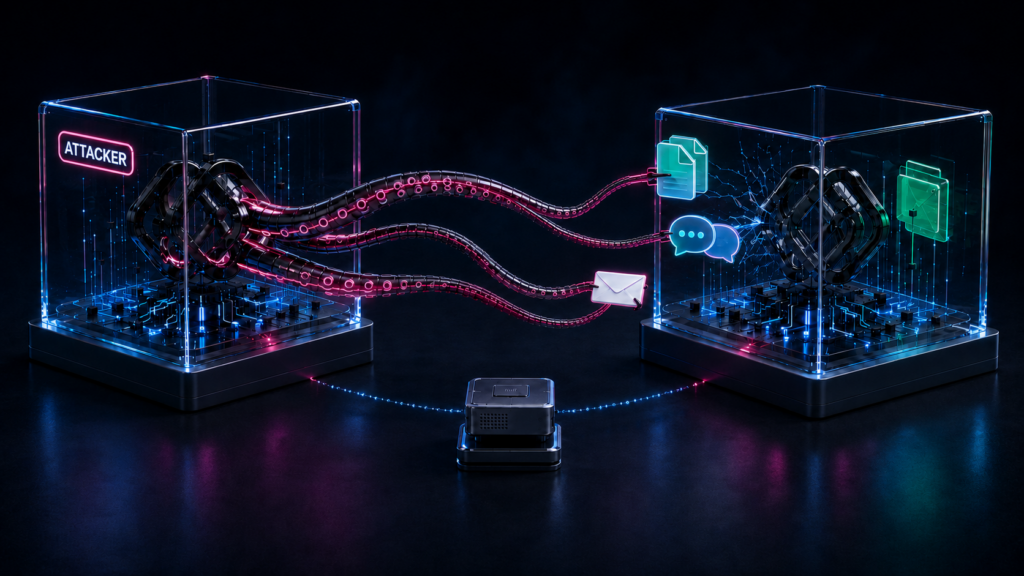 ChatGPT sandbox: shared package cache leaked data across accountsCheck Point Research found that ChatGPT code containers from different accounts shared one internal JFrog Artifactory, giving attackers a hidden channel into a victim's session and connected apps. OpenAI shut the instance down.
0 matches. Clear a filter or try another term.