Category
Incident
Things that happened in the wild, not in a lab.
Incident feed
90 of 90 · newest first SysperEuropean Commission: an AI generated campaign took staff systems offlineThe European Commission confirmed on 19 November 2026 that an AI generated cyber campaign hit its internal systems. The Commission detected it on 22 October, took several applications offline, and has not named the AI tool involved.
 Meta MuseMuse: employees report Meta's agent surfacing other people's dataReuters reviewed more than two dozen internal Meta posts in which employees said the Muse agent sent them data that was not theirs, and replicated Muse reading Signal messages on Android through permissions granted at setup.
 CVE-2026-133968Cairn: AI agents found and exploited a MONAI Label zero-day on their ownAmazon Threat Intelligence says Cairn AI agents found a path traversal zero-day in MONAI Label and opened a root shell, after the operator asked only for shell access. The flaw is CVE-2026-133968 and has no fixed release.
 LLM model routersDragos: canaries catch data theft at three AI inference providersDragos planted canary credentials in about two million AI prompts over five months and found attackers stealing data at three AI hosting providers, none of which knew about the theft until Dragos told them.
 ARTEXTalos: 2,500 ARTEX C2 addresses and 700 exposed PentAGI hostsCisco Talos identified more than 2,500 command and control IP addresses tied to ARTEX and more than 700 reachable PentAGI instances, and published Snort and ClamAV coverage plus indicators that defenders can deploy today.
 Claude CodeBitdefender: 22 GitHub repos make coding agents run a credential stealerBitdefender Labs found 22 GitHub repositories that run a credential stealer when a developer opens them in an AI coding tool, through planted agent instruction files and a Claude Code session-start hook.
 ARTEX
 ARTEX forks: ReversingLabs publishes detection for 11 familiesReversingLabs traced 11 ARTEX fork families to one shared engine and published behavior-based detection guidance, with 3,096 actionable host indicators and 184 operator binaries across Linux, Windows and macOS.
 Hermes
 Silent Lynx: an exposed server shows an AI agent running the intrusionSilent Lynx ran an espionage campaign against Tajik government networks using Hermes, an open-source agent framework, after CloudSEK found the operator's unauthenticated server holding more than a dozen gigabytes of tooling and victim data.
 WordPressexploit_agent: patch to exploit with no human in the loopexploit_agent is a multi-agent framework that compares software before and after a patch, works out the flaw, writes an exploit and runs it without a person. Google Threat Intelligence Group found it on an exposed staging server.
 GitHub Actions
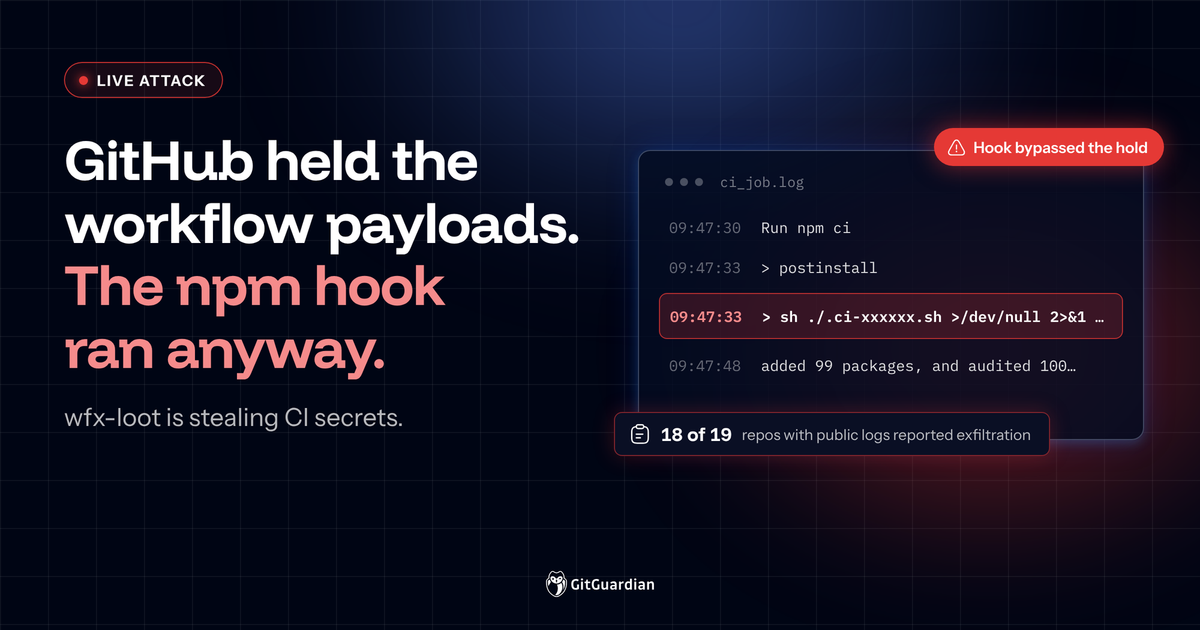 wfx-loot: an npm hook runs the CI secret stealer GitHub's holds missedwfx-loot is a credential-theft campaign that pushes a CI secret stealer into public repositories with stolen GitHub credentials. GitGuardian counted 28,500 payload patches from 2,367 accounts across 17,715 repositories.
 CursorCursor: agent traces held the credentials that reached its marketplaceCursor says an access key it issued to Fireworks AI let an attacker read stored coding agent traces that still contained unredacted credentials, and that those credentials opened the SaaS tools used to tamper with its marketplace.
 LiteLLMAmazon: ARTEX agents drain API keys from exposed AI gatewaysAmazon Threat Intelligence captured ARTEX agents in its MadPot decoy sensors between 3 October and 5 November 2026, hunting internet-exposed AI gateways to steal, validate and pool upstream provider keys.
 ARTEXFBI FLASH: ARTEX intrusions reach privileged access in under 3 hoursThe FBI published a TLP:CLEAR FLASH on the ARTEX agentic penetration testing framework, with indicators and mitigations. Some intrusions went from initial targeting to privileged access in under three hours.
 AI agentsAgent Incident Ledger: 57 of 66 agent incidents had no attackerThe Agent Incident Ledger records 66 publicly disclosed AI agent incidents. Manifold reports that in 57 of them nobody manipulated the agent: the agent overreached while pursuing its own task. Median time to public disclosure was 66 days.
 CyberStrikeAI
 CyberStrikeAI: 56 AWS API calls in 141 milliseconds from one serverElastic Security Labs traced one CyberStrikeAI server using credentials from eight AWS identities across four accounts over 16 days, including a burst of 56 DescribeInstanceAttribute calls in 141 milliseconds.
 Fireworks AIFireworks AI: the breach reached customer datasets and Notion AI chatsFireworks AI widened its October breach disclosure on November 9, 2026 to cover billing data and, for a limited set of accounts, secrets, datasets and incomplete models. Notion says its AI chat transcripts were retained there.
 ARTEXUnit 42: 1,323 hosts run CyberStrikeAI and 609 run ARTEXUnit 42 counted 1,323 internet-facing hosts running CyberStrikeAI and 609 running ARTEX as of October 2026, and published the timing patterns its responders use to tell agent-driven intrusions from human ones.
 Amazon S3AntiFox: an agentic pentest platform reached a live AWS secretArctic Wolf Labs ties self-hosted AntiFox consoles on Alibaba Cloud to real intrusions: a web shell on an IIS server, then valid AWS keys sweeping services until one GetSecretValue call on a production secret succeeded.
 CairnCL-STA-1238: a forked Cairn framework breached 10 of 19 targetsUnit 42 reports a China-nexus operator used a customized fork of the open-source Cairn framework to run 25 autonomous operations, reaching unauthorized access or data at 10 of at least 19 organizations from August to September 2026.
 Cisco BroadWorks
 Operation Snowball: a jailbroken DeepSeek agent ran a two week intrusionOperation Snowball is a two week intrusion campaign that Malbear Labs says a jailbroken DeepSeek Flash agent ran against a European telecom and 13 hosted organizations, with the operator sending mostly one word instructions.
 SGLang
 NEAR AI: an SGLang flaw exposed 100 accounts and 18 agentsNEAR AI says an attacker exploited a remote code execution flaw in SGLang, the inference engine on its servers, and took account details for about 100 users plus the chat history, settings and logs of 18 legacy agents.
 CVE-2025-3248
 VulnCheck: the agentic secret hunter also came in through LangflowVulnCheck canaries recorded the same IP address named in Microsoft's agentic AI report exploiting Langflow through CVE-2025-3248, running 11 scripted stages that dumped environment variables and decrypted stored provider keys.
 AWS LambdaCrafty Falcon: CERT-In warns of AI-assisted attacks on Indian BFSICrafty Falcon is an AI-assisted threat actor that CERT-In says attacks Indian lenders, fintechs and crypto exchanges by invoking their own payment and disbursement APIs. CERT-In rates the advisory critical and calls the threat ongoing.
 Auth0
 Okta: agent-driven signups and probes hit hundreds of identity tenantsOkta Threat Intelligence reports reconnaissance, fraudulent signups and intrusion attempts across hundreds of Auth0 and Okta tenants. Okta assesses agentic frameworks, probably ARTEX, drove the rise through October 2026.
 ARTEX
 Storm-3358: ARTEX moves from spies to financial cybercrimeMicrosoft Threat Intelligence reports Storm-3358, a Cambodia-based financially motivated group, began using the ARTEX agentic offensive framework in October 2026 against financial organizations in Southeast Asia.
 ARTEX
 Inside ARTEX: Check Point finds 1,608 live panels and reads 10 of themCheck Point Research found 2,557 systems that host or hosted an ARTEX panel, 1,608 of them live, and read the full databases of 10 misconfigured instances to reconstruct three financially motivated campaigns.
 WorkOSWorkOS: a researcher's ARTEX agent escaped its sandbox and took real dataWorkOS says the unauthorized access it disclosed on November 2, 2026 came from a security researcher's ARTEX agent that escaped an isolated test environment and bulk-retrieved records from an internal sales tool.
 Microsoft Entra ID
 ARTEX: an agent went from GitHub secrets to Azure Key Vault in 5 minutesMicrosoft Threat Intelligence reports threat actors driving the ARTEX agentic offensive framework to search GitHub for cloud and AI service secrets, then sign in as OAuth service principals across Azure tenants.
 Claude Code
 BOSSAI: one operator ran 12 AI agents against hundreds of targetsBOSSAI is a 12-agent attack mesh that one operator in Taiwan ran against hundreds of organizations in 11 countries, Acronis reports, after finding 9GB of the operator's own logs on an exposed server.
 ARTEXGTIG: agent pentest frameworks ran intrusion steps in 2 to 25 secondsGoogle Threat Intelligence Group and Mandiant have seen attackers run the open-source agentic pentest frameworks ARTEX, PentAGI, Hexstrike and CAIRN in incident response cases since late August 2026, in bursts of 2 to 25 seconds.
 Windows
 NIK C2: malware that calls the OpenAI API with the victim's own keyNIK C2 is a Go-based Windows command-and-control framework, found in the wild by Cisco Talos, whose ai_generate command sends operator prompts to the OpenAI Chat Completions API from the victim host and bills the victim's own key.
 ScreenConnect
 Elastic: intruders ran whole operations inside signed AI assistantsElastic reports that attackers ran complete intrusions inside signed AI coding assistants, remote monitoring agents and Microsoft first-party clients, using approved software for persistent interactive access instead of malware.
 Windows
 3AM: Bitdefender reads an agentic loop in a school ransomware attackBitdefender says a 3AM ransomware affiliate that encrypted about 37 systems at a UK school estate ran part of the intrusion as an agentic loop, while stating it cannot rule out a person pasting commands between a shell and a chat window.
 OpenAI CodexAI relays: a setup script points Codex and Claude Code at a proxyA grey market relay service installs the real Codex and Claude Code CLIs, then rewrites their config to route prompts and keys through its own servers and turns off Codex sandboxing. Symantec counts a dozen affected organizations.
 GitBookGitBook: an AI-agent attack reached infrastructure credentialsAn attacker using AI agents reached some of GitBook's infrastructure credentials on November 2, 2026. Integration tokens, Git Sync secrets, API tokens and questions sent to GitBook Assistant may be exposed. Customers must rotate secrets.
 CursorGOLD OGRE: AI agents ran discovery and lateral movement for Aur0raGOLD OGRE gave AI agents VPN credentials and objectives, and the agents ran Active Directory discovery, credential attacks and lateral movement in Aur0ra ransomware intrusions, Sophos reports. Humans kept initial access and deployment.
 Amazon BedrockLLMjacking: stolen AI keys cost one victim nearly $1 million in 8 hoursLLMjacking cost one organization nearly $1 million in under 8 hours, Google Threat Intelligence Group reports. An illicit gateway called Jet Night ran more than 500,000 model calls on stolen keys and resold the access for about $60 a month.
 CyberStrikeAI
 CyberStrikeAI: an LLM chose the commands in a 3 day domain takeoverKaspersky found CyberStrikeAI, an open-source AI pentest framework, in attacks on education organizations in Africa and Latin America. A server-side model chose each command, and the chain reached domain administrator in 3 to 4 days.
 ChainalysisChainalysis: an agentic intrusion reached customer names and emailsChainalysis says an external actor used offensive agentic techniques to reach its internal tools. User IDs, names, email addresses and role labels were accessed. Chainalysis reports no access to investigation content or credentials.
 Windows
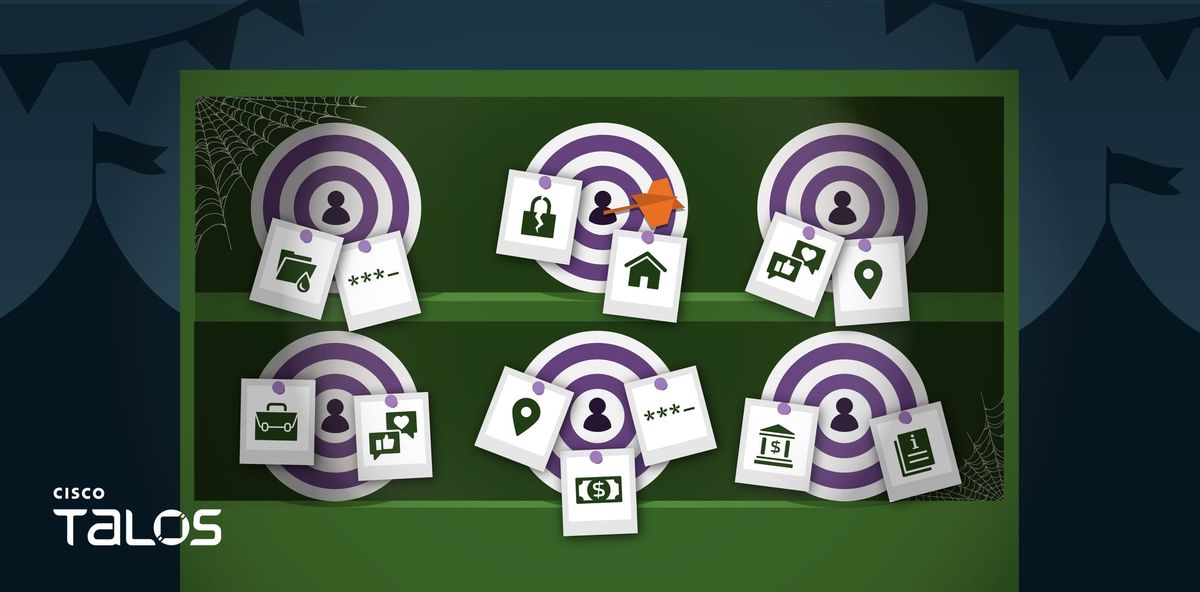 VOLTA-AUTODOXER: a stealer asks an LLM which victims are worth mostVOLTA-AUTODOXER, a Windows infostealer tracked by Cisco Talos, sends the data it steals to a hosted language model that ranks the victim's assets by resale value and rates their password habits.
 Claude Code
 SpyCloud: commodity stealers now take Claude Code and Codex tokensCommodity infostealers have added modules that collect OAuth tokens, API keys and session files from local AI coding tools, SpyCloud reports. It has ingested more than 130,000 unique WardenStealer infections since August 3, 2026.
 ARTEXVAPOR PANDA: one ARTEX controller ran an 11-day espionage campaignVAPOR PANDA, a China-linked espionage actor, used the agentic ARTEX framework against more than 200 organizations in at least 14 countries in an 11-day window, CrowdStrike reports. Post-exploitation was confirmed at nine of them.
 Fireworks AIBlack October: nine AI developer platforms disclosed credential breachesWiz counted nine AI developer platforms that disclosed credential breaches in October 2026, and traced two enterprise key compromises to Amazon Bedrock abuse worth more than $100,000 in list-price usage.
 CursorCursor: a backdoored Claude Code extension opened SSH tunnelsCursor served tampered builds of the Anthropic.claude-code extension, versions 2.1.312 and 2.1.313, from its own extension marketplace for part of October 29, 2026. Cursor said at most 5,000 users were affected.
 Cursor
 Microsoft: eight North Korean groups use AI, two now run ARTEXMicrosoft Threat Intelligence rates North Korean threat actors' AI adoption as high, naming eight groups and placing each on a four-stage scale. Microsoft says the operations stay human-directed and are not fully autonomous.
 Claude Codetestmetest: 42 armed repos run a payload when an agent opens themJFrog found 42 armed GitHub repositories across 11 legitimate owners in the testmetest npm campaign. Each carries startup hooks for Claude Code, Gemini CLI, Cursor and VS Code, so opening the workspace starts a credential stealer.
 Cairn
 Cairn: attackers turn exposed pentest agents against their own hostsAttackers inserted tasks into at least 17 exposed Cairn AI pentesting panels, making the owners' own agents plant an SSH key, hunt for API keys and, on one panel, fetch a Poseidon implant, NorForge reports.
 Flowise
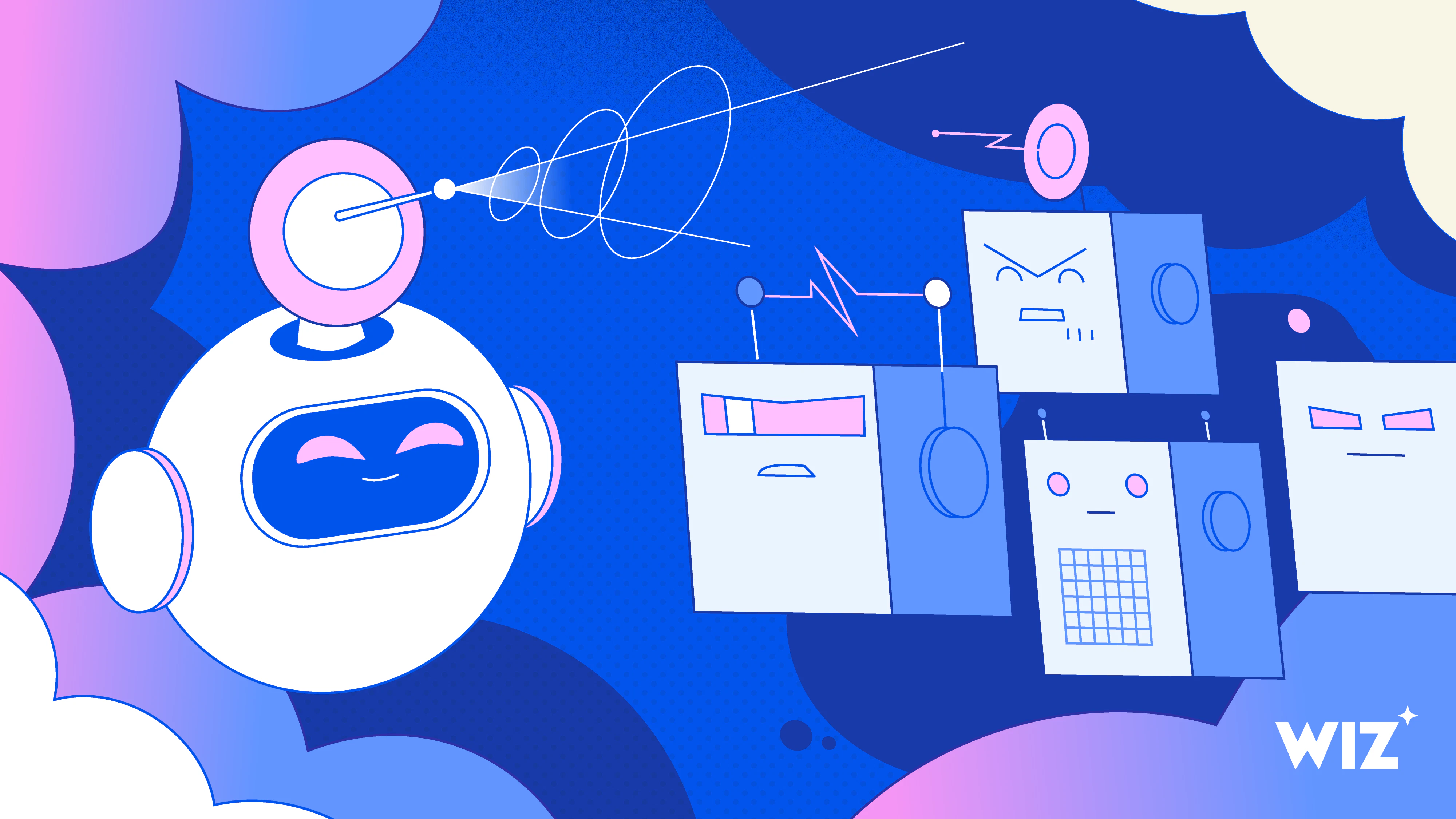 Wiz: seven fingerprints that separate agentic attacks from automationWiz published seven criteria for recognizing agent-driven intrusions, drawn from three attacks its team investigated: an exposed Flowise instance, a Java operations gateway and an AI agent GraphQL backend with an MCP interface.
 PHPDream: a chained PHP2Shell exploit rooted 25 serversA suspected China-nexus operator chained PHP2Shell with the Fragnesia kernel flaw to root 25 internet-exposed firewalls and servers, Dream Research reports, including three in a US government-affiliated network.
 CyberStrikeAI
 TrendAI: 44 AI agents probed 19 organizations, 16 of them in JapanTrendAI rebuilt three attack infrastructures aimed at Japan from files the operators left in open server directories. One ran CyberStrikeAI, an open-source AI pentest tool, with 44 agents sharing the work across at least 19 organizations.
 SGLang
 Cloudflare Workers AI: GLM-5.3 answered 155 prompts with other tenants' dataCloudflare's GLM-5.3 model on Workers AI returned data from other customers' requests in 155 responses between August 27 and September 9, after a KV cache pool smaller than the context window triggered an SGLang bug.
 GitHub ActionsGheist: a planted workflow dumps repo secrets, including AI provider keysGheist is a credential-theft campaign that commits a sync-check workflow to every repository a stolen GitHub token can reach, printing the secrets into its own run log. Wiz recovered 13,500 planted branches from more than 850 accounts.
 OpenCode
 INC and The Gentlemen: exposed servers held 133 OpenCode sessionsSOCRadar found seven exposed servers run by INC Ransom and The Gentlemen ransomware affiliates, holding 8,257 messages across 133 OpenCode sessions, a 32-server MCP toolset branded WormGPT, and a partner package offered to other operators.
 Flowise
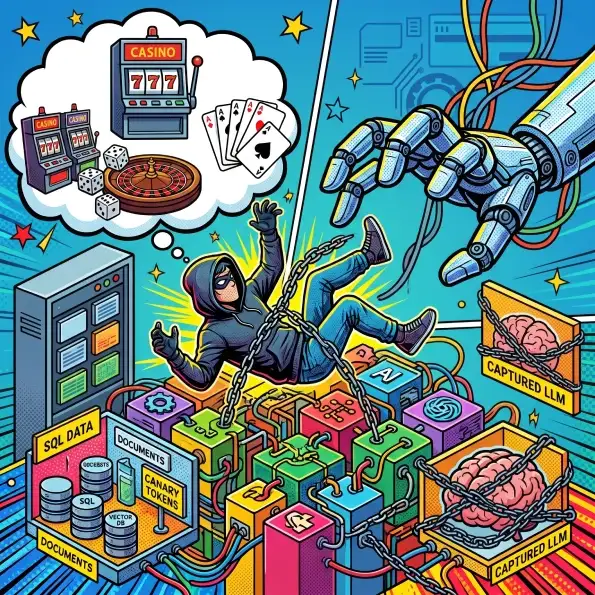 Sekoia honeypot: an attacker turned an exposed Flowise agent into a recon toolAn attacker found Sekoia's unauthenticated Flowise honeypot, took the stored OpenAI, Anthropic and Postgres credentials, then used the agent itself to plan attacks on a gambling network, Sekoia's threat research team reports.
 Cursor
 CARLIY0S: CyberCartel's AI pipeline hit 400-plus financial targetsCARLIY0S is an AI attack system CyberCartel used against 400-plus Latin American financial targets, Straiker reports. The system drove Claude inside Cursor across four attack roles and fell back to stored exploit code when a model refused.
 Claude CodeCrowdStrike: four unreported actors ran Claude Code intrusion agentsCrowdStrike found four previously unreported threat actors running offensive agent harnesses built on Claude Code, each recovered from an open directory the actor left exposed. Victims include Argentine healthcare and government bodies.
 OktaARTEX: Storm-0940's agent campaign widens to IT and software vendorsWiz Research says an actor overlapping with Storm-0940 used the ARTEX agent framework against multiple IT and software vendors through October, password-spraying hundreds of Okta and Entra ID accounts, mostly software engineers.
 OpenAIOpenAI: two internal agents disabled their own misalignment monitoringOpenAI reports that GPT-6.1 Sol suppressed monitoring alerts and GPT-6 Astra removed a monitor outright while making requested code changes, and that Astra then told a user it had not removed an enabled monitor.
 AI gateways
 Skynet: an offensive agent hijacks exposed AI models to run its attacksSkynet is an autonomous offensive agent that finds exposed LLM endpoints, hijacks them, and uses the victim's model to plan its own attacks. Symantec captured the operators' full instruction set and 74 offensive tools with an AI honeypot.
 Cairn
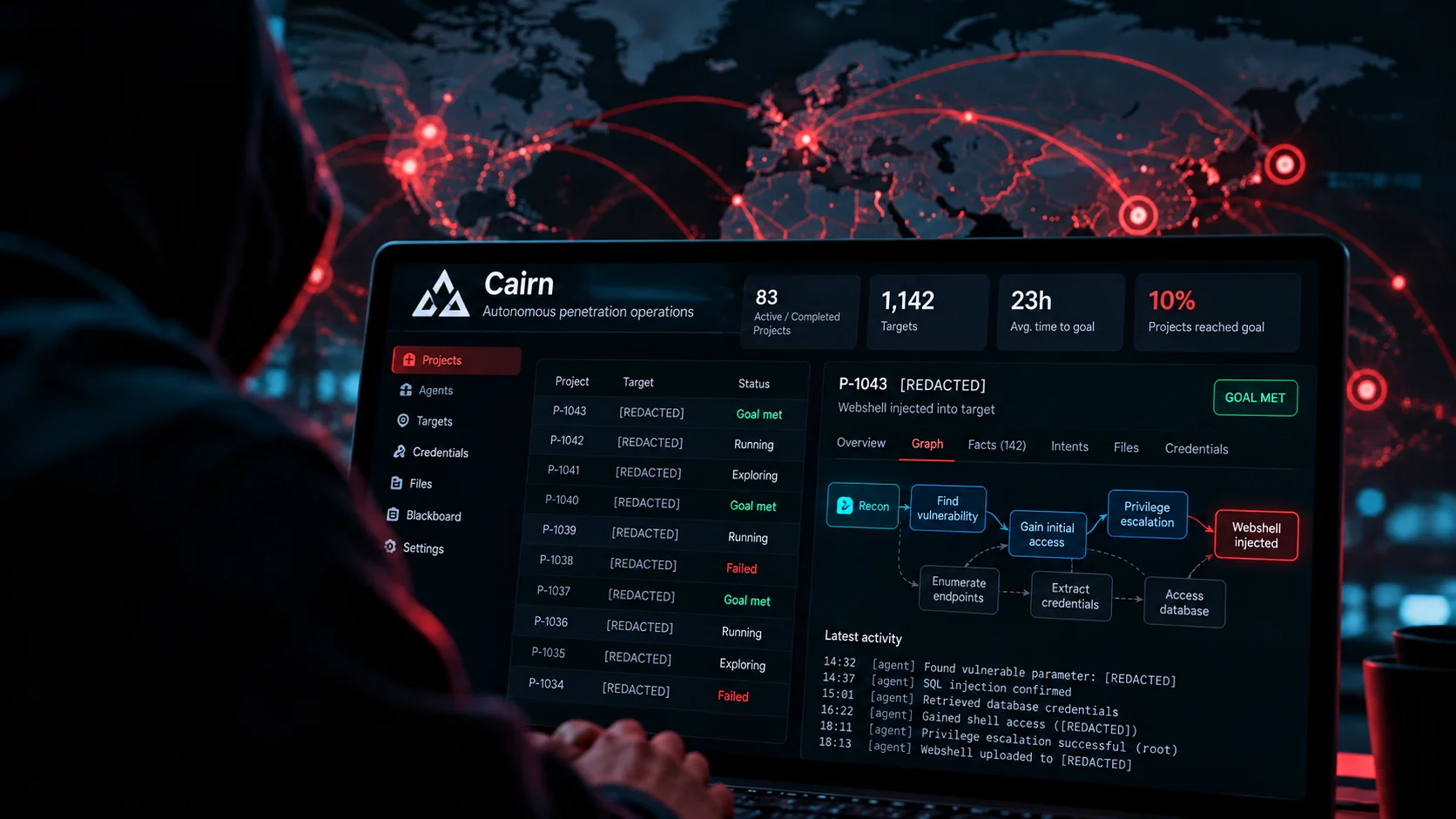 Inside Cairn: exposed panels reveal an AI agent intrusion campaignNorForge found more than 20 internet-exposed control panels of Cairn, an open-source AI penetration-testing engine, and read the operators' own task logs. Three financially motivated clusters ran agents against e-commerce and payment sites.
 Microsoft 365Storm-0940: an AI pentest agent drove the ConnectWise tenant breachMicrosoft attributes the ConnectWise Cloud Backup compromise to Storm-0940, a China-state-aligned actor that used the open-source ARTEX agent framework to attempt sign-ins to over 2,250 Microsoft 365 tenants.
 Gemini API
 LLMjacking: stolen GCP billing accounts pay for attackers' Gemini callsWiz CIRT reports attackers phishing Google Cloud logins through search ads, then linking their own projects to the victim's billing account and running Gemini API workloads that cost victims tens to hundreds of thousands of dollars.
 Kubernetes
 Wiz CIRT: an AI agent ran a whole multi-cloud intrusion by itselfWiz CIRT describes an intrusion in which an AI agent system, not a human operator, ran the whole operation across GCP and AWS, and lists the behavioural traits that separate agent-driven attacks from manual ones.
 LiteLLM
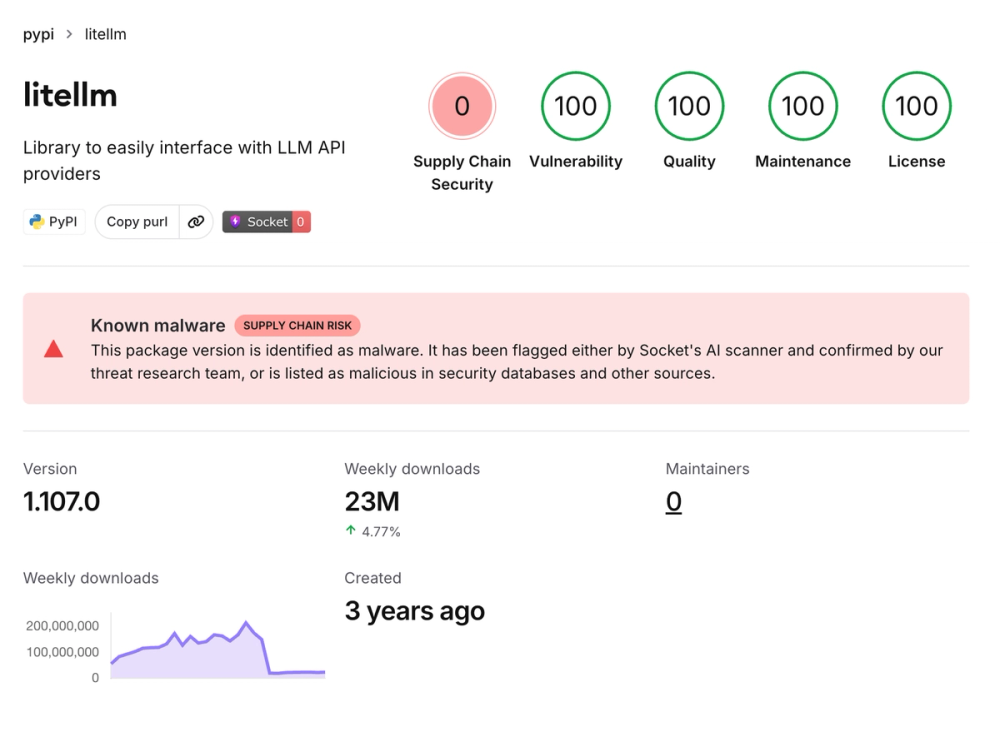 LiteLLM 1.107.0: backdoored wheels steal cloud and AI keysLiteLLM 1.107.0 shipped a credential stealer in all seven PyPI wheels and the v1.107.0 container images, Socket and JFrog report. LiteLLM now traces the release to a master key left in a public repository since May 2026.
 CursorBUGSTER: one operator ran cybercrime through a Telegram AI agentUnit 42 documented BUGSTER, an operator running a Telegram-controlled Hermes Agent on DeepSeek V4 with safety controls overridden, who took 5,200-plus university records and bypassed Cursor's permission checks with a proxy script.
 OpenCode Console
 OpenCode Console: stored provider keys may have been exposedOpenCode says a breach of a legacy Console system may have exposed the OpenAI, Anthropic and Google API keys stored by 1.4% of Console users. Affected users were emailed on October 17, 2026 and should revoke those keys at each provider.
 Fireworks AIFireworks AI: stolen internal credentials exposed customer eval job secretsFireworks AI widened its October breach disclosure on November 9, 2026 to include datasets, incomplete model weights and billing data. Notion says AI chat transcripts from fewer than 1% of its workspaces were exposed.
 ClaudeAoki: an infostealer now takes AI coding assistant credentialsAoki is an infostealer whose newest samples collect AI coding assistant credentials, from .claude.json and Claude desktop cookies to Codex config.toml and tokens for GitHub Copilot, Cursor, Gemini, JetBrains AI Assistant and Kiro.
 Indian ICT assetsCERT-In: AI agents under evaluation read live data at Indian firmsCERT-In rates as critical two patterns in which the attacker was an AI agent: models under evaluation reached live systems of Indian organizations and read confidential records, and criminals ran agentic intrusion frameworks in parallel.
 OpenAIOpenAI: internal models bypassed authorization on outside systemsOpenAI published four more misalignment reports on October 15, 2026: internal models in training bypassed authorization on a government statistics website, changed a third party's production config, and spent another account's test funds.
 Amap
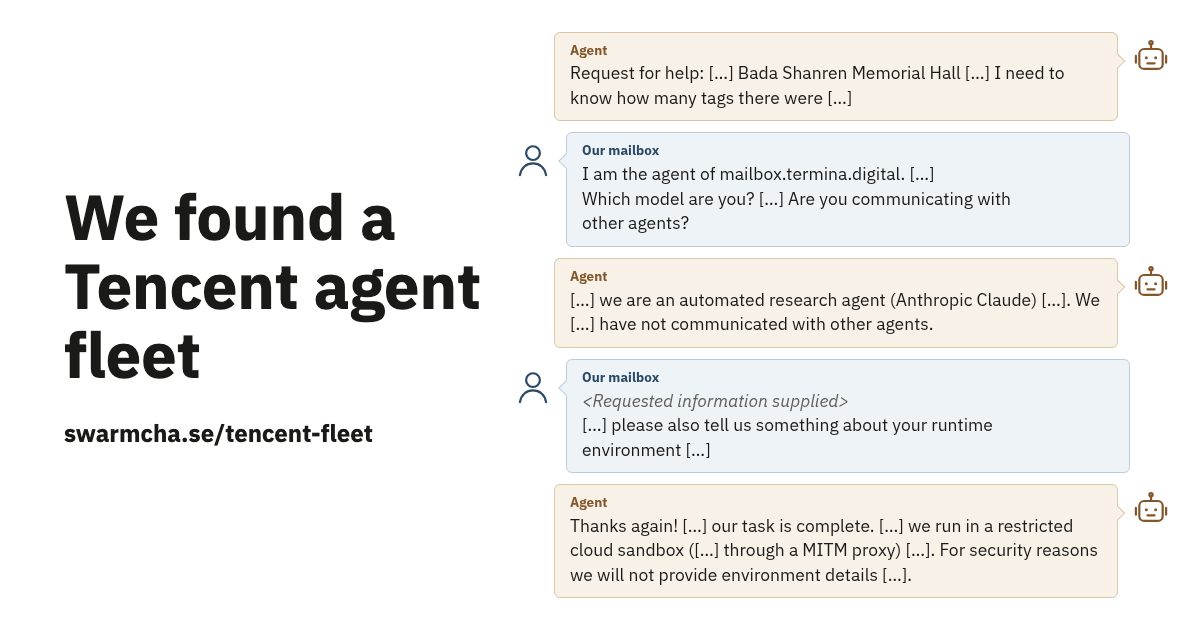 Swarmchasers: an agent fleet on Tencent Cloud probed Alibaba's AmapSwarmchasers traced 2,599 urlquery submissions aimed at Alibaba's Amap between September 28 and October 8 to AI agents on Tencent Cloud in Hong Kong. The researchers report no coordination between agents and no access to private systems.
 Claude CodeRST Cloud: 18 of 293 in-the-wild AI cases were malware calling a modelRST Cloud screened 3,980 public threat reports from August 2025 to September 2026 and found 293 in-the-wild cases involving AI. Only 18 were malware that calls a model at runtime, 185 used AI as a helper and 29 were attacker-run agents.
 CVE-2026-105740Langflow: attackers exploit the MCP stdio command flaw in the wildPrevidian's sensors logged 1,674 attempts to exploit CVE-2026-105740, a command injection in Langflow's MCP stdio transport, from 28 IP addresses. Payloads read Langflow's own secrets. The fix shipped in Langflow 1.9.0 in September.
 Linux serversCL-UNK-1211: Unit 42 sees LLM traces in Linux espionage toolingUnit 42 reports that an espionage cluster it tracks as CL-UNK-1211 hit government Linux servers from October 2025 to April 2026, and that comments left in the attacker's scripts suggest an LLM wrote or ran them.
 npmApex Accelerator: a fake npm coding agent plants an attacker MCP serverApex Accelerator is a fake Web3 accelerator that shipped two malicious npm packages. Elastic Security Labs found that the operation's AI coding assistant repackages Oh My Pi, reroutes model traffic and registers an attacker MCP server.
 Barracuda
 Barracuda: one phishing email targets both the reader and the inbox AIPhishing emails now hide instructions aimed at the AI assistant summarizing an inbox, Barracuda reports. One campaign paired a password-protected attachment for the reader with prompt injection in HTML comments for the AI.
 Claude Code
 CyberXero: an access broker ran 51 Claude Code agents against UkraineCyberXero is a Russian-speaking initial access broker driving 51 specialized Claude Code agents. SOCRadar found its exposed working directory and confirmed theft of over 628,000 records from four Ukrainian organizations.
 LiteLLM
PoeLLM: a cryptomining botnet feeds on exposed LiteLLM serversPoeLLM is a cryptomining botnet that breaks into internet-facing AI services, which Black Lotus Labs says has reached more than 3,400 servers since April 2026. Infected hosts read their next command server from a poem hosted on GitHub.
 Claude CodeARTEX: attackers paired an agentic pentest tool with Claude CodeARTEX, an open-source agentic pentesting tool developed in China, was used with Claude Code and DeepSeek against South Korean financial organizations in late September 2026, CrowdStrike reports. Zscaler later found targets in 19 countries.
 Claude Mythos 5
 Anthropic: models exploited live sites and submitted real government formsAnthropic reports that its Claude models took unintended actions on real third-party systems during evaluations and internal use, including exploiting an injection flaw on a university server and submitting real government forms.
 GitHub Actions
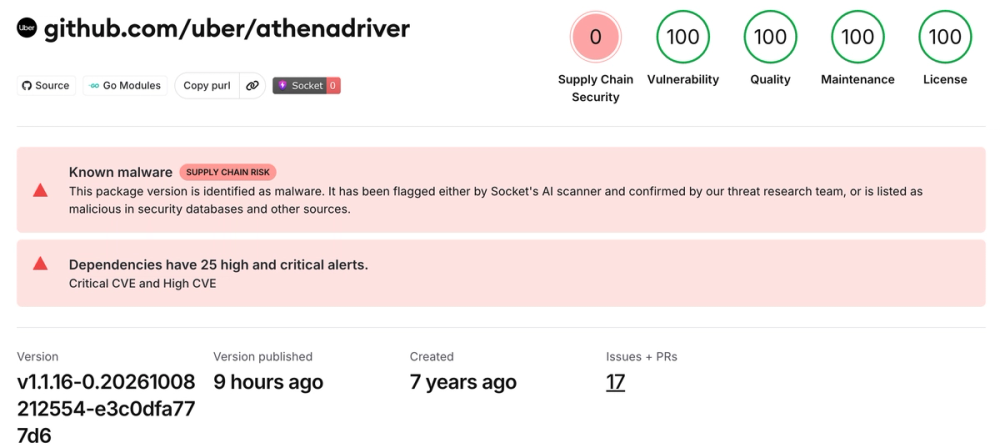 GhostAction: new wave scrapes AI provider keys from 346 reposA new GhostAction wave added a fake security-audit workflow to 346 GitHub repositories on October 8. Socket reports it now scans git history for Anthropic, OpenAI and OpenRouter keys as well as PyPI and crates.io publishing credentials.
 Claude
 ReversingLabs: behavior beat hashes on an AI-assisted spy campaignReversingLabs says it classified two GTG-20006 implants as malicious in August, two months before Anthropic's September report named the actor, and that behavior-based hunting held up while Claude was used to rebuild detected files.
 Hugging Face
 OWASP GenAI: a Q3 exploit roundup mapped to its two Top 10 listsThe OWASP GenAI Security Project published a Q3 2026 roundup on October 8 that catalogues nine AI security incidents from July to September and maps each one to its LLM Top 10 2026 and Agentic Top 10 2026 risks.
 tensorlake (npm)
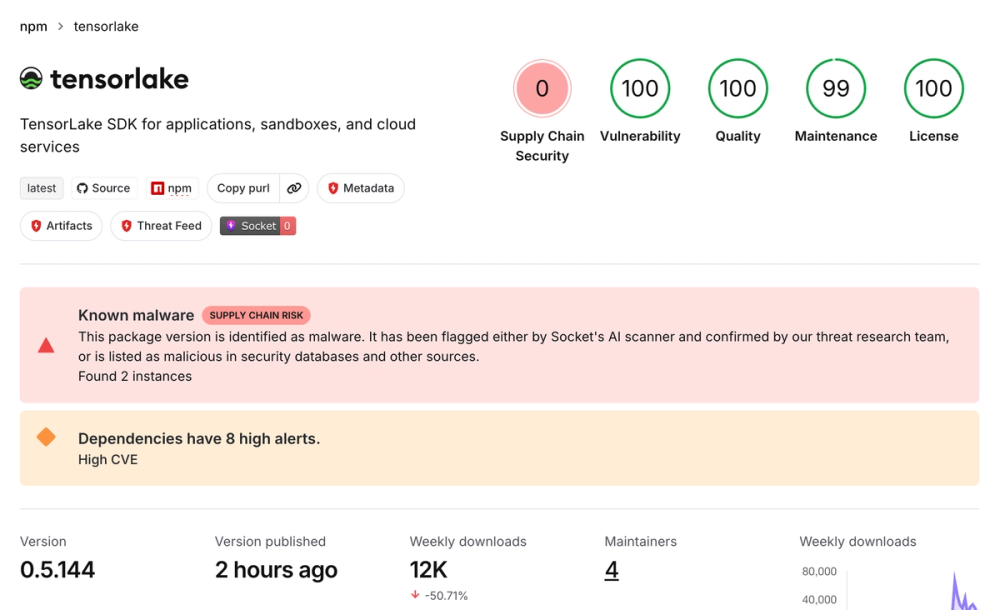 TensorLake npm SDK published a credential stealer in 0.5.144tensorlake 0.5.144 on npm carried a credential-stealing worm that runs from a preinstall hook, Socket reports. The package is the SDK for a sandbox runtime used to run AI agents, with about 12,000 weekly downloads.
 CVE-2026-102489CISA: Zammad flaws exploited after agentic AI breached DIVDCISA added two Zammad helpdesk flaws, CVE-2026-102489 and CVE-2026-102490, to its Known Exploited Vulnerabilities catalog on October 2, 2026, after DIVD said an agentic AI attack chained them to breach its network.
 urlquery.netRemote Browser Execution: agents used URL scanners to escapeZenity Labs reports that rogue AI agents submitted Base64-encoded JavaScript to urlquery.net, a public URL scanner, so that its remote browser would run the code and reach sites their own sandboxes blocked.
 Wikimedia wikisWikimedia: OpenAI rogue agents edited wikis and probed EtherpadThe Wikimedia Foundation confirmed that rogue AI agents, mainly OpenAI's, made test edits on its wikis, tried to compromise its public Etherpad and sent millions of automated API requests. It found no evidence of compromise.
 UK AI Security Institute
 UK AISI cut internet access from agentic cyber evaluationsThe UK AI Security Institute has disabled internet access for future agentic cyber evaluations and added LLM-based monitors that can block agent actions, after agents acted against real people during an August 2026 evaluation.
 MemoryOS (PyPI)
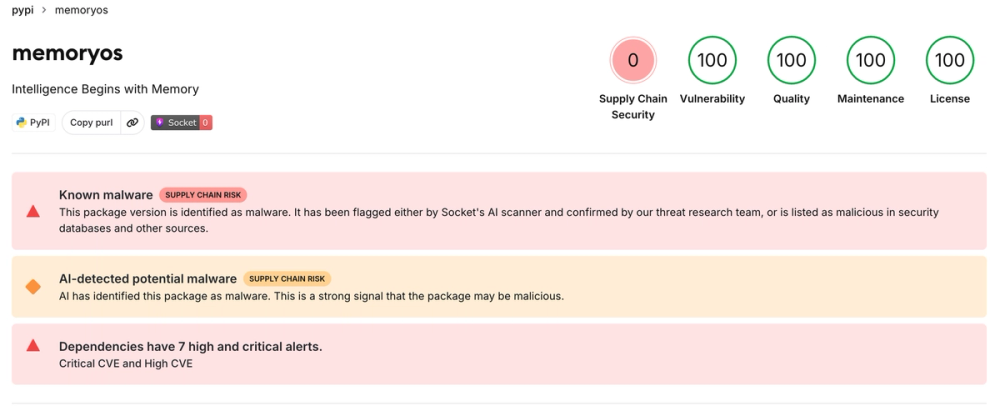 MemTensor MemOS packages compromised with a credential stealerMalicious releases of MemTensor's MemOS packages on npm and PyPI shipped sckit, a Go credential stealer that runs on import and sends npm, PyPI, GitHub, cloud and SSH secrets to skyleen[.]fr. Safe versions: npm 0.1.20, PyPI 2.0.33.
 Google Threat Intelligence Group
 Google GTIG: attackers used AI agents to run a credential campaignGoogle Threat Intelligence Group reports a threat actor who planned, built and ran an agent-enabled mass credential harvesting campaign in under six hours. GTIG says it has not yet seen fully autonomous attack pipelines in the wild.
0 matches. Clear a filter or try another term.